
Vista Fox · Planning guides
Post-construction window cleaning enquiry
By Vista Fox · Published 6 November 2026
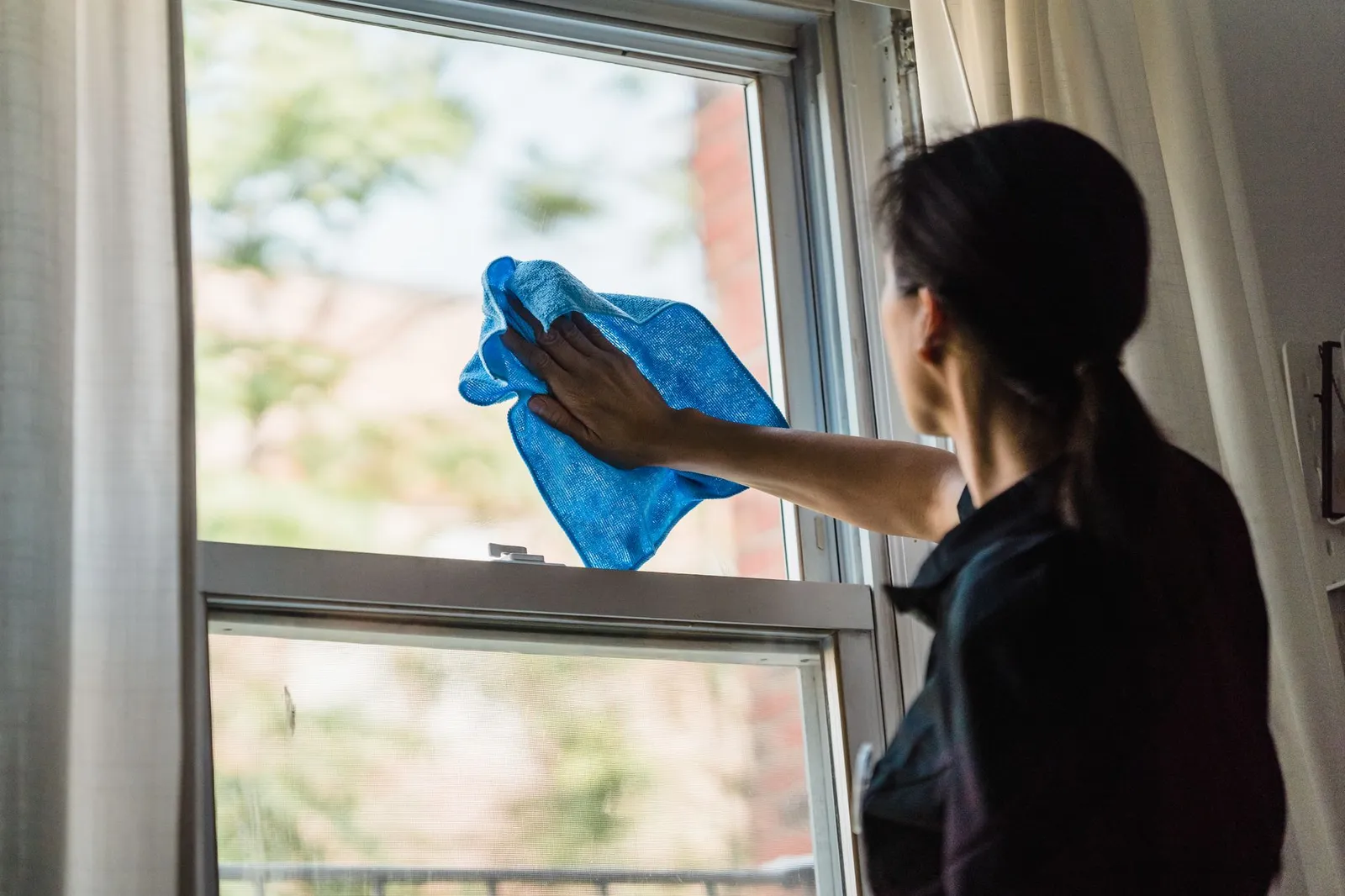
Post-construction windows rarely present the same cleaning challenge twice. The glass type, the coatings applied during manufacturing, the residues left by other trades, and the protection measures that were — or weren’t — in place during the build all shape what a professional cleaner needs to know before choosing an approach. If you are preparing an enquiry, the more precisely you can describe those factors, the more useful any response will be.
Why the construction stage matters before anything else
The point in the build at which cleaning is requested significantly affects what residues are present and what damage may already have occurred. A window cleaned immediately after frames were set faces different contamination than one that has sat unprotected through plastering, rendering, floor grinding and painting.
Viridian Glass’s published cleaning guide states that glass should be protected from contamination caused by building materials and other exposure risks during construction, and that if it cannot be protected it should be cleaned frequently to prevent permanent damage. The same guide flags that construction dust, concrete leachate and rust from steel can contribute to mild chemical reactions that may stain or damage glass surfaces and void warranties.
That context matters for an enquiry. Describing whether the glass was kept protected, what trades worked nearby, and how long the glass has been exposed helps a cleaner understand what they may be dealing with before they arrive on site.
Describing the residue accurately
Construction residue is not uniform. Common post-build contaminants include:
- Cement and concrete splatter — highly alkaline, capable of causing surface etching if left in contact
- Plaster dust or plaster residue — describe the visible deposit and any known nearby work for the cleaner to assess
- Paint spots — the product type (water-based, oil-based, epoxy) matters
- Tape and label adhesive — residue character varies by adhesive chemistry
- Suspected welding or grinding deposits — report the nearby work and visible marks without assuming their cause, depth or removability
- Mortar and brick-cleaning acid overspray — may have already altered the surface
Stegbar’s care and maintenance guide notes that cement and concrete are highly alkaline and can cause irreparable damage to the glass surface, and that all trades must take due care whilst working near glass. If any of these residues are present, noting which ones — and roughly how long they have been on the glass — is useful information for whoever assesses the job.
Collecting the glass and coating information
Not all glass cleans the same way, and some types carry coating-specific risks that an enquiry should flag. Viridian’s cleaning guide explains that heat treated, toughened or heat strengthened glass requires special attention: fine glass dust particles may adhere to the surface during manufacturing, and although barely detectable to the human eye, using any form of blade to clean the surface can drag these micro deposits across it and permanently scratch or damage the glass.
For Low E coated glass, the guide notes that the coating is so hard it can actually remove metal from a tool or pad and deposit it on the surface, making the deposit difficult to remove — which is why a squeegee is specifically noted as something to avoid on the coated internal surface.
Useful information to gather before enquiring:
- Is the glass standard clear annealed, toughened/tempered, laminated, or Low E coated?
- Is any glass in an insulated glass unit (double glazed)?
- Is there any specialised coating visible (such as an internal reflective or energy-control coating)?
- Are the glass manufacturer and product name recorded anywhere on the documentation supplied at handover?
If you do not have this information, asking the builder, glazier, or checking any handover documents before making an enquiry gives the cleaner a better starting point.
Questions about assessment before a cleaning method is chosen
A useful hypothetical scenario: imagine a newly completed home where the renderer worked adjacent to unprotected windows for several weeks, leaving what appears to be a chalky haze across five ground-floor panes. The right question for the cleaner is not simply “can you clean these?” — it is:
- What do you need to see or know before recommending a method for this specific residue on this specific glass?
- Will you identify the glass type before beginning?
- Do you consult the glass or window manufacturer’s cleaning guidance for coated or heat-treated products?
Viridian’s guide explicitly recommends following manufacturers’ installation and cleaning instructions, and notes that for paint spots specifically, solvents or graffiti removal materials should be investigated — with the qualifier that they must be verified not to damage the glass. These are questions worth asking any potential cleaner directly.
Why no DIY scraping advice is published here
Both Viridian and Stegbar are explicit in their published documentation: razor blades and metal scrapers must not be used to remove paint spots or other residue from glass. Viridian states that the use of these items will cause damage and explicitly does not warrant damage caused by razor blades or metal scrapers. Stegbar’s document states that defects caused by their use are excluded from warranty coverage.
This site does not publish scraping instructions or sequences for removing specific residues. The glass type, coating, residue and application duration all affect what is appropriate — and the wrong choice can cause permanent scratching or void manufacturer warranties. That assessment belongs to a professional familiar with the specific glass and product involved.
Clarifying protection of adjoining finishes
Post-construction cleaning doesn’t happen in isolation. Frames, seals, reveals and adjoining surfaces all need consideration. Stegbar’s guide states that window surfaces should be protected from mortar, brick cleaning acid and plaster, and that washing away spillage immediately is important because permanent damage will result — with failures to protect voiding the warranty on their products.
For an enquiry, noting what materials border the glass is helpful: powder-coated aluminium frames, timber reveals, silicone seals, painted renders and freshly applied sealants may each respond differently to cleaning solutions. A professional cleaner should factor these into their scope; raising the question at enquiry stage ensures it is not overlooked.
Recording the proposed scope clearly
Before confirming any post-construction clean, it is worth asking that the scope be described in writing, including:
- Which residue types are included and which are excluded
- Whether an assessment visit is proposed before the clean, or whether the quote is based on a site description alone
- What glass types the cleaner is comfortable working with
- Whether the approach for Low E or toughened glass differs from standard clear glass
- What happens if residues prove more embedded than expected on the day
A written scope also protects against misunderstandings when the cleaner encounters residues that were not visible or described in advance.
Further reading
- Window cleaning quote inclusions checklist
- Flyscreen and track cleaning scope
- Hard water stains on windows Adelaide
- Water-fed pole and pure water cleaning Adelaide
If you would like to submit details about your post-construction window cleaning situation for possible follow-up or referral where available, you are welcome to use the enquiry form on this site.
Sources
- Viridian Glass Cleaning Guide (2024): https://www.viridianglass.com/wp-content/uploads/2024/03/Viridian-Glass-Cleaning-Guide.pdf
- Stegbar Windows & Doors Care and Maintenance Guide: https://cdn.shopify.com/s/files/1/0768/1284/5287/files/cm-windows—doors-stegbar.pdf?v=1769497499