Vista Fox · Adelaide window specialists
Leadlight UV Film Adelaide | Heritage Glass Protection
By Vista Fox · Published 5 May 2026
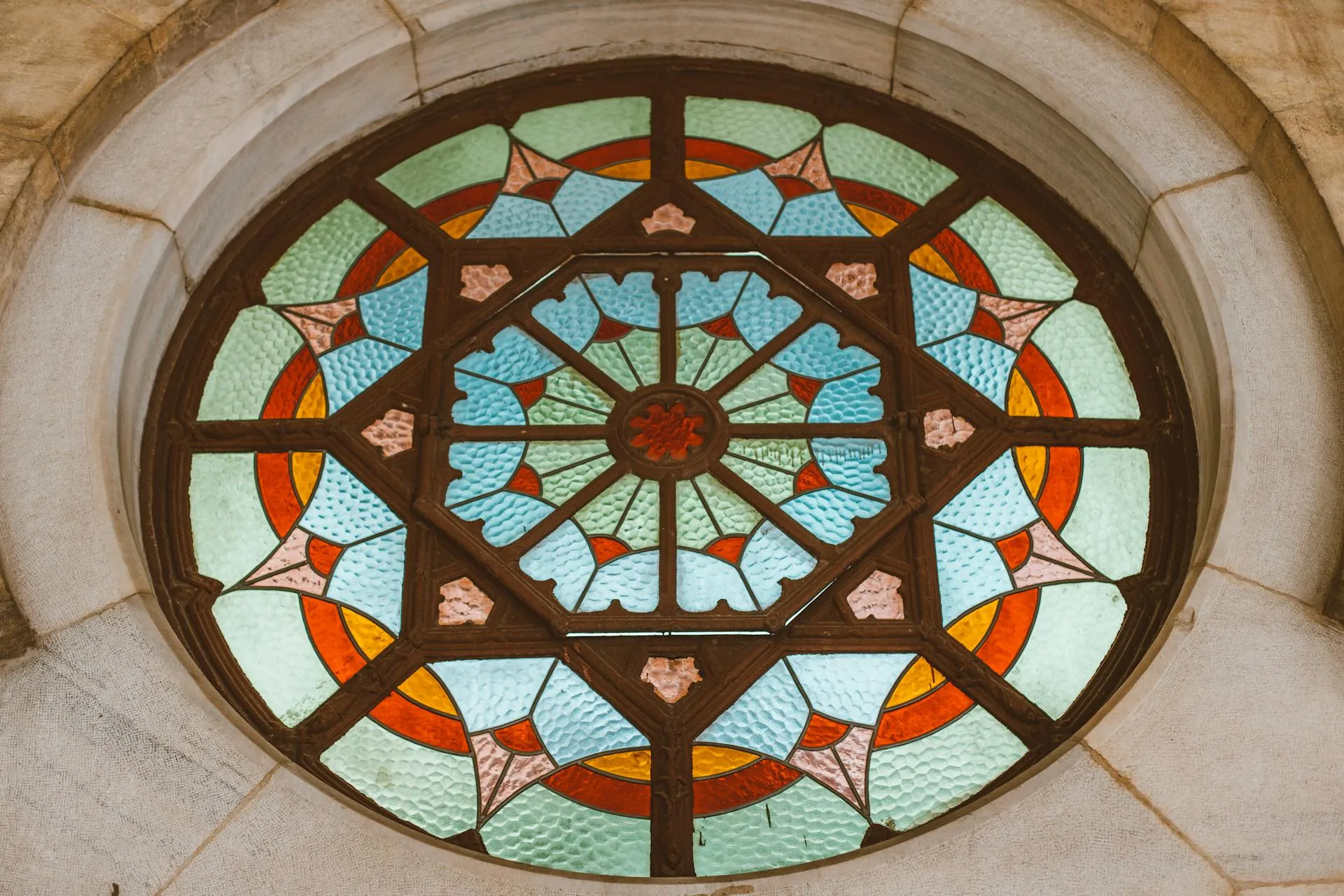
Leadlight, Stained Glass and UV Damage in Adelaide Heritage Homes — How Museum-Grade UV Film Works
A clear, low-VLT-loss UV-protective film bonded to the inside face of an Adelaide leadlight panel blocks more than 99 per cent of incident UV radiation without changing the appearance of the glass, the lead came, or the room behind it. It is the conservation-aligned answer for original 1880s to 1920s leadlight under direct sun exposure — a Walkerville sandstone villa’s front door, a Norwood bay window, a North Adelaide stair-landing panel — and it has been the standard advice from glass conservators internationally for two decades.
This article is the long-form reference for why, when, and how UV film is the appropriate intervention for original Adelaide leadlight and stained glass. It sits below the AS/NZS 2208 heritage-glass pillar, which covers the safety-glazing question in detail. The two articles work together: the pillar covers compliance under AS/NZS 2208 and AS 1288:2021; this article covers the optical-conservation question that arrives at most heritage homes well before the safety-glazing one does.
What Adelaide sun actually does to leadlight
UV radiation degrades leadlight in three different ways, on three different timelines. None of them are reversible.
The painted and enamelled detail in a stained-glass panel — the faces of saints in a chapel light, the leaves and berries in an Art-Nouveau Adelaide front door, the hand-fired colour wash on a 1900s federation sidelight — sits on the surface of the glass as a low-temperature kiln-fired pigment. UV photons break the binder chemistry over decades. The colour fades. Detail disappears. A hand-painted face that was crisp in 1910 reads soft in 2026. By the time the change is visible, irreversible damage has already occurred at the molecular level.
The lead came expands and contracts under heat cycling. Adelaide’s summer surface-temperature swing on a west-facing pane — cool in the morning, 60°C-plus in the afternoon, cool again overnight — works the came joints harder than the seasons in the cooler climates the original Tiffany and Morris-tradition leadlight was built for. Came fatigue manifests as bowing panels, loose solder joints, and eventual cracking at the joint lines.
The coloured glass itself, where it was made with metallic-oxide colourants, is more UV-stable than the painted detail — but the cement between the lead came and the glass is not. UV-driven embrittlement of the cement is a primary cause of rattling panels in original leadlight, and a secondary cause of pane displacement in heavy weather.
The Adelaide UV index runs 12 to 14 (extreme to extreme) for most of summer. The Bureau of Meteorology’s daily UV charts make the sustained exposure obvious. Leadlight that survived a hundred years of British or American sun is not on the same exposure curve in Adelaide.
What “museum-grade UV film” actually is
Museum-grade UV-protective film is a clear or near-clear polyester film, coated with UV-absorbing chemistry, designed to bond to the interior face of an existing pane. The performance specification a buyer should expect to see on the manufacturer’s published datasheet:
- UV rejection of 99 per cent or higher across the 300-380 nanometre band — the band that drives pigment fade. Better products extend protection further into the visible-blue range (380-400 nm) where some sensitive dyes and watercolour-pigment analogues continue to degrade.
- Visible Light Transmission (VLT) of 70 per cent or higher for “clear” UV film. The pane reads as glass, not as a tinted insert. Lower-VLT solar films are a different product family; a leadlight conservation install almost always wants the clearest available product.
- Solar Heat Gain Coefficient (SHGC) movement secondary to UV protection. UV film is not a solar-control product; if heat is also a brief, the conversation moves toward the spectrally-selective film families covered in the film-types orientation article.
- WERS for Film accreditation (Window Energy Rating Scheme for Film, jointly administered by AGWA and WFAANZ) on the product line. WERS is the AU performance-rating framework for applied film, and it is the citation a heritage architect or conservator will reach for.
The “museum-grade” descriptor maps to the conservation-museum installations that drove the product category — the British Museum, the V&A, the National Gallery of Australia all run UV-blocking film on display-case glazing and on architectural windows where works on paper, painted glass, or organic materials sit in indirect sunlight. The International Institute for Conservation and the Glass and Glazing Federation publish technical guidance on the specification; WFAANZ technical bulletins translate that into the AU film-product context.
What “museum-grade” does not mean is “any UV film.” The cheap retail-grade UV films sold for short-term home application typically deliver 90 to 95 per cent UV block at install, fade to 60 to 80 per cent over five years, and discolour visibly. The architectural product specified for leadlight is a different category of film with a different chemistry, a different warranty, and a different price.
How application works on leadlight without damaging the panel
The single most common mistake on a heritage-glass UV install is treating the leadlight pane as if it were a flat sheet of float glass. It isn’t. The lead came stands proud of the glass surface by 2 to 4 millimetres on most original Adelaide leadlight, the cement between came and glass is fragile, and the panel itself often sits in a timber rebate that has settled out of square over a century. The install protocol that protects the asset:
Interior face only. UV film is applied to the inside face of the pane, looking outward. Exterior application is wrong for this glass type — the cement, the came, and the original putty cannot tolerate the install solution and the squeegee pressure, and exterior UV exposure on the film itself shortens its service life dramatically. Interior application is the only correct answer for original leadlight.
Dry-lay survey first. A senior installer dry-lays a film template across the pane to identify how the film will fall around the came. On an irregular leadlight panel — diamond-pattern federation work, the Art-Nouveau curves of an Adelaide bungalow front door, a pictorial scene with multiple internal came lines — the film is cut to land on the glass between came lines, not over the came itself. Cutting over the came risks cement disturbance and creates a visible film edge against the lead.
Conservation-grade preparation. The interior face of the pane is cleaned with deionised water only. No ammonia, no oil-based solvents, no detergent. The cement around the came is not touched. Any loose dust is removed with a soft brush, never a high-pressure rinse.
Slip application. The film is wet-applied with a controlled mounting solution and squeegeed firmly to drive out moisture and trapped air. The squeegee pressure is calibrated to seat the film against the glass without working solution into the came-glass interface. On a panel with a particularly fragile cement line, a felt-edge applicator replaces the standard rubber squeegee.
Edge trim at the came, not over it. The film is trimmed to land cleanly along the inside edge of each came line. The cut is made with a fresh blade, against a heritage-safe trim guide, on the interior side only. The cut never touches the came itself.
Cure period. Full optical clarity reaches the end of a 7 to 14 day cure window on most architectural UV films. The UV-protection performance is present from the moment the film is bonded; the residual moisture haze that resolves over the cure window is cosmetic only.
This is fiddly work. It is the reason DIY UV-film application on leadlight typically fails — not because the film is bad, but because the protocol around the lead came is unforgiving. The DIY-vs-professional install article covers the wider failure-mode catalogue.
What UV film does NOT do
Honesty about scope keeps the conservation conversation grounded. UV film does not:
- Restore already-faded pigment. Where a 1910 hand-painted face has lost its detail to a century of sun, no film brings it back. The conversation at that point moves to a glass conservator and a restoration commission. UV film stops further loss; it does not recover what’s gone.
- Replace structural repair of cracked came. A panel with bowing came, broken joints, or displaced glass needs a glazier-conservator’s hands before any film can be applied. Film over a structurally compromised panel locks the compromise in place.
- Change the safety classification of the pane. UV film and AS/NZS 2208 safety film are different products. A clear UV film delivers UV protection only — not the pendulum-impact-tested anti-shatter performance that defines safety glazing under AS/NZS 2208:1996. Where both are needed (an Adelaide front-door sidelight that’s both heritage-listed and a child-safety risk), Vista Fox specifies a dual-performance film or layers a UV film over a safety-rated assembly. The AS/NZS 2208 pillar covers the safety-glazing specification in full.
- Block visible-light fade entirely. Visible light at the blue end of the spectrum (380 to 450 nm) continues to drive slow fade in the most UV-sensitive pigments even with a 99-per-cent UV-rejection film in place. The fade rate drops by an order of magnitude; it does not drop to zero. For exhibition-grade conservation work, the additional intervention is reduced visible-light exposure (curtains, internal screens) — not a heavier film.
Heritage suburbs where this is most common in Adelaide
Original leadlight survives in Adelaide’s character zones in higher concentration than in any other Australian capital outside inner Melbourne and inner Sydney. The suburbs Vista Fox sees most:
- Walkerville, Gilberton, and Medindie — the 1880s to 1900s villa stock, almost all of which carries original leadlight in front doors, sidelights, and the principal-room bay windows. See Walkerville window cleaning and film.
- North Adelaide — Tynte Street, Jeffcott Street, Stanley Street — the same era and the same configuration. Heritage-listed and overlay-zoned across most of the precinct. See North Adelaide.
- Norwood front-of-house leadlight — particularly the federation cottages along The Parade’s residential side streets, where the front-door fanlight is original.
- Unley, Hyde Park, Malvern — character-zone bungalow stock with sandblasted-bevel and leadlight combinations on dining-room and stair-landing panels.
- Goodwood, Mile End, Torrensville — earlier worker’s-cottage stock with simpler leadlight in entry sidelights.
- Mount Barker, Stirling, Aldgate — Hills cottages and original retreats with leadlight in fireplace surrounds and stair landings.
The pattern is consistent: the most exposed panels are the front-of-house ones (north or west aspect, full afternoon sun), and they are also the panels most often listed under heritage overlay and most often the focal asset of the home’s sale value. UV film is the only conservation-aligned intervention that meaningfully extends their life.
Working with a heritage architect or conservator
For a heritage-listed property, or a property under a council heritage overlay, the question of “do I need approval for UV film” arises early. The general position — confirmed across Adelaide councils Vista Fox has worked with — is that interior-applied, reversible, optically-clear UV film is not a regulated alteration. It does not change the building’s external appearance. It does not modify the original fabric. It can be removed without trace if a future owner wants the panel back to bare glass. The product sits below the threshold most heritage overlays set for a development application.
Where the conversation does need to involve a heritage architect or conservator:
- Heritage-listed properties (state or local listing). A heritage architect can issue written confirmation that the proposed UV-film product and install protocol are conservation-aligned. Vista Fox provides the manufacturer datasheet, the WERS for Film accreditation evidence, and the install protocol document for the architect’s file.
- Properties with a recent conservation management plan (CMP). The CMP usually names specific conservation interventions that are pre-approved. UV film on identified vulnerable panels is often listed; if it isn’t, a written variation is straightforward.
- Insurance-listed assets — where the leadlight panel is named as a scheduled item on the home’s contents or fabric insurance. The insurer typically wants documentation that the conservation intervention does not affect the listed asset’s authenticity.
The documentation Vista Fox supplies on every heritage-glass UV job: manufacturer product datasheet, UV-rejection certification (independent test reference), WERS for Film accreditation evidence, install protocol document, install record (panel-by-panel, with photos), and the manufacturer warranty (typically 12 to 15 years residential, naming the film against pigment-fade and adhesion failures).
Frequently asked questions
Will UV film darken my Adelaide leadlight?
No. A correctly specified clear UV film holds VLT at 70 per cent or higher — the pane reads as glass, not as a tinted insert. The room behind the leadlight stays the colour it was. From the street, the leadlight looks unchanged. The film is detectable only on close inspection from inside, where a faint reflective sheen at the glass-came interface is visible to a trained eye.
Is UV film reversible if I sell or restore the property?
Yes. UV film is bonded to the interior face of the pane with a pressure-sensitive adhesive that releases under controlled removal. A trained installer can take the film off in a single afternoon on most domestic-scale leadlight installs without disturbing the came, the cement, or the original glass. The pane returns to bare-glass state. This reversibility is the central reason heritage architects accept the intervention.
Can I get UV film on stained glass as well as leadlight?
Yes. Painted, enamelled, and metallic-oxide-coloured stained glass benefits from UV protection on the same logic as leadlight — pigment chemistry, came expansion, and cement fragility behave the same way. Vista Fox has installed UV film on stained-glass panels in Adelaide chapels, character schools, and heritage homes. The application protocol is identical; the panel survey is more detailed where the stained glass is multi-layered or has plated panels.
Does UV film replace structural leadlight repair?
No. A panel with bowing came, broken solder joints, or loose glass needs a leadlight conservator’s repair before any film is applied. UV film over a structurally compromised panel locks the compromise in place. The honest sequence is: stabilise first, then conserve. Vista Fox refers the structural repair to an Adelaide leadlight conservator and returns to install the UV film once the repair has cured.
How long does UV film last on a heritage front door in Adelaide?
Architectural UV-film warranties typically run 12 to 15 years on residential interior application. In practice, a properly bonded film on a stable panel performs well beyond the warranty period — Vista Fox has inspected installs at the 18-year mark with UV-rejection performance still in spec. The failure mode is usually edge delamination on the most thermally-stressed panes (large west-facing single panels in the worst Adelaide summers), not wholesale film failure. When the film is replaced at end of life, the original leadlight is unchanged.
Sources
- Standards Australia — AS/NZS 2208:1996 Safety glazing materials in buildings
- Standards Australia — AS 1288:2021 Glass in buildings — Selection and installation
- WFAANZ — WERS for Film accreditation program
- AGWA — How WERS Works
- International Institute for Conservation — conservation guidance and publications
- Glass and Glazing Federation (UK) — heritage glass technical guidance