Vista Fox · Adelaide window specialists
Norwood Heritage Villa UV Film Case Study | Vista Fox
By Vista Fox · Published 5 May 2026
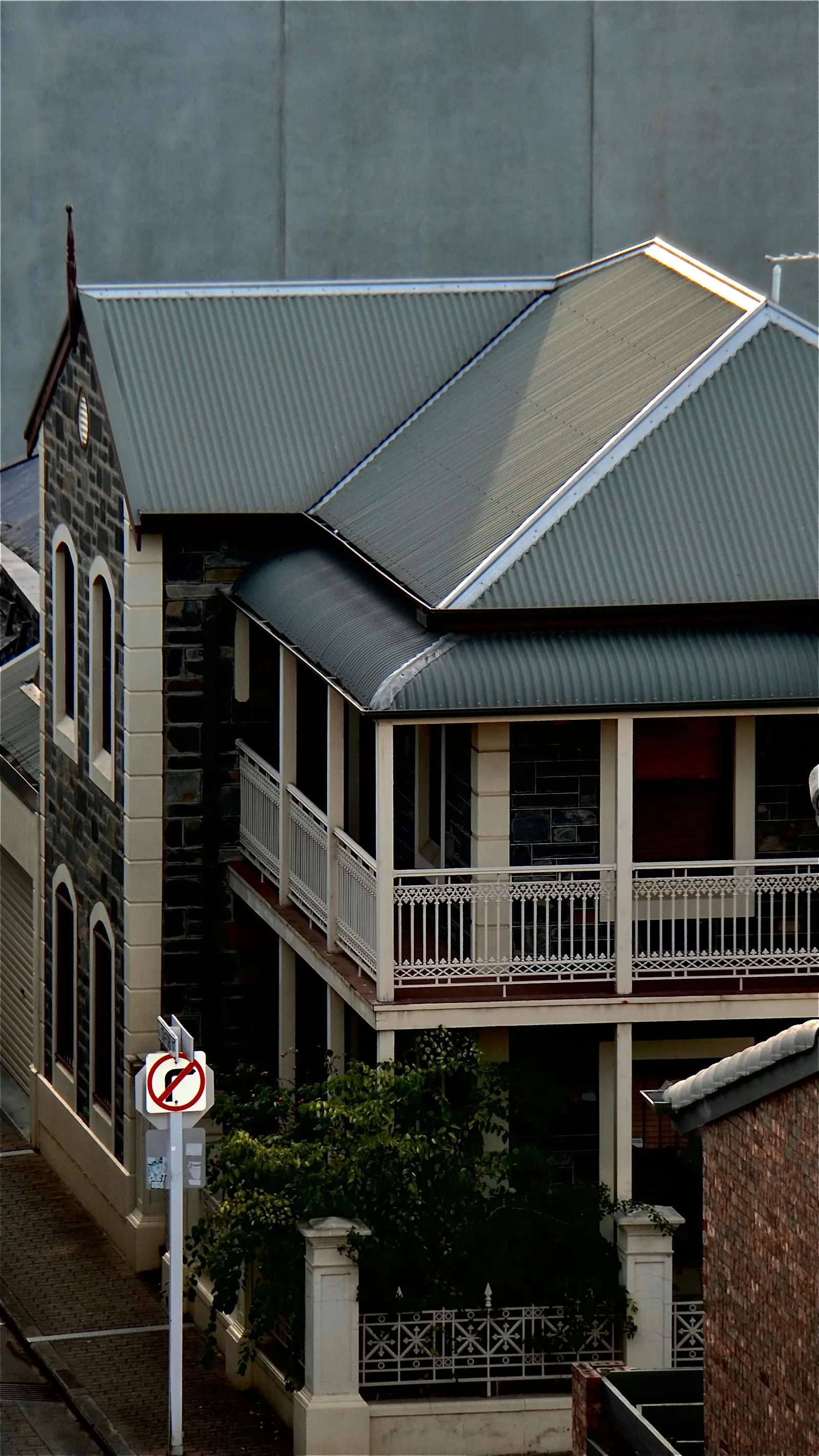
Norwood Heritage Villa Case Study — UV-Protective Film on a 1900s Sandstone Frontage
A Norwood 1900s sandstone villa with original leadlight in the front-door and sidelight assembly needed UV protection for the timber floor and the antique furnishings without altering the leadlight aesthetic. Heritage villa window film in Adelaide — specifically museum-grade clear UV-protective film applied to the interior face — solved the brief: 99% UV block, near-zero change in visible light transmission, fully reversible install, and a documentation pack for the property file. Cost band on a job of this kind sits at $1,200 to $2,400 depending on pane count. This is a worked example of how a properly specified UV film job runs on a heritage frontage in Adelaide’s inner east — what we look at, what we install, and what the owner gets back at handover.
Vista Fox is a WFAANZ member and a WERS for Film accredited installer. We work the heritage stock across Norwood, Kensington, Marryatville, College Park, Walkerville and the wider NPSP / Walkerville councils, and the brief described here is one of the most common architectural-film conversations on those streets.
The brief
The owner’s brief was specific and conservation-minded: stop the floor and the sofa fading without changing the look of the leadlight. The villa sits a short walk from The Parade in Norwood, late-Victorian sandstone with a bluestone band course, a tessellated tile verandah and an original leadlight assembly across the front-door arrangement — door panel, two sidelights, and a small bay window in the front formal room.
What the owner didn’t want:
- A tinted film that would darken the leadlight or change the colour of the cathedral glass quarries
- A reflective or mirror finish that would read as “applied” from the street
- An install that would damage the cames or require any glass to come out
- A product that couldn’t be reversed if a future owner wanted the original glass untreated
What the owner did want:
- UV protection across all front-of-house glass — the timber floor in the entry and the formal room, the leather sofa, two oil paintings on the southern wall
- A documentation pack for the property file that a future buyer’s conveyancer or architect could read
- Conservation-aligned framing — the kind of intervention a heritage architect would sign off on without flinching
The brief constraints
Norwood sits inside the City of Norwood Payneham & St Peters local heritage character zones across most of its older grid. The villa wasn’t individually listed but was contributory to the character zone. Heritage character listing in Adelaide rarely treats applied window film as a regulated alteration — film is internally applied, reversible, and not visible from the street on a properly specified clear UV product. That’s the conservation logic the International Institute for Conservation framework supports for UV control on light-sensitive interior fabric: the least-intrusive intervention that achieves the conservation outcome.
The conservation-aligned position we took into the survey:
- Reversible install only. No adhesive that bonds permanently to the came lead or the cathedral-glass surface. Manufacturer-rated removable film system.
- Visual neutrality. A near-zero VLT change product — the leadlight reads the same to the eye and to the camera before and after.
- Documented intervention. Photographic record at install, manufacturer compliance sticker placed in a discreet corner, WERS for Film performance certificate filed with the property documentation.
For the broader regulatory background on safety-rated film on heritage glass — which is a separate conversation from UV-only film but often comes up in the same survey — see the pillar reference: AS/NZS 2208 window film and Adelaide heritage glass.
Glass survey findings
A proper heritage-glass survey before quoting is the part that separates a film job from a film mistake. The walk-through found:
- Front door panel and matching sidelights — original etched leadlight, late-Victorian cathedral glass quarries, lead came in good condition with one minor lift on the sidelight that needed conservator attention before any film work touched the came
- Bay window in the front formal room — modified leadlight, mostly original with one repair quarry from the 1970s using mismatched glass; pre-1990 annealed throughout
- Front formal room side windows — pre-1990 annealed double-hung sashes; no leadlight; standard architectural pane
- Kitchen rear — modern toughened replacement, post-1995, identifiable from the manufacturer stamp in the corner
The pre-1990 annealed glass in the front-of-house assembly is typical of Norwood villa stock and sits inside the discussion in the pre-1990 glass risk profile piece. AS 1288:2021 trigger-zone analysis was noted for the file but wasn’t the brief’s primary concern — UV was. The owner wanted to know about safety glazing as a separate future project, not as part of this scope.
Film specification
The product selected was a museum-grade clear UV-protective film. The numbers on the manufacturer datasheet:
- UV block — 99%+ of incident UV radiation across both UV-A and UV-B
- Visible light transmission (VLT) — change of less than 2% pre- and post-install (the leadlight reads the same)
- Solar heat gain coefficient (SHGC) — modest reduction; the film isn’t a solar film and doesn’t claim to be
- Reflectivity — non-reflective on both faces; the film is invisible to the street and to the room
- Manufacturer warranty — 12 years residential, with the warranty pass-through to the property at sale documented in writing
- WERS for Film performance certificate — issued for the installed film/glass combination
The product line is a clear UV film, not a tinted solar film, not a privacy film. For the technical comparison of how a UV film differs from a sputtered solar film or a ceramic spectrally-selective product, see solar UV film and the construction explainer in the film-types cluster.
Install protocol on leadlight
Install on leadlight is not the same as install on a flat aluminium-framed pane. The protocol Vista Fox runs on heritage-glass jobs:
- Pre-install conservator check. The minor came lift on the sidelight was repaired by a leadlight conservator before any film work commenced. Vista Fox does not lay film over a came in compromised condition.
- Interior-face install only. Film bonds to the inside face of the leadlight. Never the outside. Never the came.
- Dry-lay around the came. The film is cut to template against the came pattern, not over it. Each cathedral-glass quarry is filmed individually if the came geometry requires.
- Edge trim against the timber rebate. Clean cut against the timber glazing bead, no overrun, no adhesive contact with the rebate.
- Photographic documentation. Before, during, and after photos of every panel filmed, filed with the install record.
- Compliance sticker placement. Manufacturer compliance sticker affixed in a discreet corner — visible to a specifier looking for it, invisible to a casual eye.
- Cure window noted. Film optical cure runs 7 to 14 days in mid-spring conditions. The owner was briefed not to clean the inside face of the glass during that window.
The crew on a heritage-glass install runs slower than a standard residential film job — usually one panel per 30 to 45 minutes versus 15 to 20 minutes on a standard pane. That time is in the price, and it should be.
Outcome
The handover record on the job:
- UV exposure on the interior fabric — measured at less than 1% of incident UV through the filmed panels, against ambient through an unfilmed reference pane in the kitchen. Manufacturer datasheet performance verified at install.
- Leadlight aesthetic — unchanged. Walk-through with the owner against the pre-install reference photographs. Same colour rendition through the cathedral quarries. Same texture. Same how-the-light-falls in the entry hall at 4pm.
- Documentation pack handed to the owner —
- Manufacturer datasheet
- WERS for Film performance certificate (AGWA explanation of how WERS works)
- Vista Fox install record with panel-by-panel photography
- Manufacturer warranty document
- Reversibility statement (the install can be removed without damage to the underlying glass within the warranty window)
- Compliance reference. Manufacturer test certificate referencing AS/NZS 2208 where applicable to the safety classification — noted on the file even though the job’s primary brief was UV, not safety, because the owner asked about safety as a future scope.
The conservation-aligned reversibility documentation is the part that matters most on a heritage frontage. Future buyers, future conservators, and future architects can read the file and see what was done, with what product, by whom, on what date, and how to remove it.
What this kind of job typically costs
The cost band for an architectural UV-protective film job on a Norwood-style heritage frontage with a leadlight assembly typically lands in the $1,200 to $2,400 range depending on:
- Pane count. A front-door + two sidelights + bay window assembly is usually 4 to 7 panes. Add the front formal room sashes and the count climbs.
- Leadlight presence. Filming around came geometry takes longer than filming a flat pane. Adds labour.
- Access. Most Norwood heritage frontages are ground-floor; second-storey work moves the band up.
- Glass condition pre-install. A came repair before film, a glazing-bead refresh, or a full conservator survey on a deteriorated assembly all sit outside the film scope and add separately.
- Documentation depth. Standard film install records are included. A full conservation-grade documentation pack with 4K photography and conservator sign-off is a small premium.
For the broader film cost picture across residential and commercial work, see the window tinting cost in Adelaide 2026 pricing pillar.
The numbers above are real strategic bands the operator quotes against in 2026. They are not the cheapest film numbers in the Adelaide market and they are not the most expensive — they are what a properly specified, manufacturer-warranted, WERS-rated film job from a WFAANZ-member installer typically costs on a heritage Norwood frontage.
Why this is the moat content for architect-introduced enquiries
Most heritage villa film enquiries reach Vista Fox via one of three paths: a direct Google search (“UV film Norwood” or “leadlight protection Adelaide”), a Houzz architect referral, or a heritage architect’s specifier list. The architect-introduced channel cares about case studies. They want to see a worked example of an install on glass that looks like their client’s, with documentation that looks like the documentation they file on their own jobs. That’s why this article exists — and why the Norwood frontage is a useful archetype rather than an invented anecdote. The job above is representative of the architectural-film conversation Vista Fox has on heritage Adelaide stock most weeks of the year.
For another worked example on a different glass archetype, see the Stirling acreage UV-protective film case study — same brief (UV protection without changing the look), different glass profile (large north-facing passive-solar picture windows rather than leadlight).
FAQ
Can heritage homes have window film installed in Adelaide?
Yes — and it’s one of the lowest-impact heritage interventions available. Applied window film is internally bonded, reversible within the manufacturer warranty window, and not visible from the street on a properly specified clear UV product. Adelaide local heritage character zones rarely treat film as a regulated alteration because the install doesn’t change the building’s external appearance. Listed properties (state or local register) should still be checked before quoting — the conservation outcome usually supports the install, but the documentation pathway varies.
Will UV film show on leadlight?
A clear museum-grade UV-protective film changes visible light transmission by less than 2%. The leadlight reads the same colour, the same brightness, and the same texture before and after install. A tinted solar film is a different conversation — those products will alter the leadlight’s appearance and aren’t typically the right specification for a UV-conservation brief. The film type matters more than the brand.
Is this kind of install reversible?
Yes. Within the manufacturer warranty window (typically 12 years on residential UV product), the film can be removed without damage to the underlying glass when removed by an accredited installer. Vista Fox documents reversibility as part of the install record so future owners or conservators can see the pathway. DIY removal of an aged film is where damage typically happens — that’s a separate conversation covered in the window film removal territory.
How long does UV film last on heritage glass?
A correctly specified architectural UV film carries a 12 to 15 year manufacturer warranty for residential applications, with field life usually meeting or exceeding the warranty period on interior-applied installs out of direct exterior weathering. Field experience on Adelaide heritage stock — interior-face install, no UV degradation pathway from outside — typically runs 15 to 20 years before any specifier-level reassessment is needed. The film doesn’t yellow under the manufacturer-specified usage.
Do I need conservation approval for window film on a heritage Norwood villa?
In most cases, no — applied film on the interior face of a window does not change the building’s external appearance and is not a regulated alteration under most Adelaide local heritage character zones (NPSP, Walkerville, Unley, Adelaide Hills foothills). State Heritage Register listings and individually-listed properties should be checked with the relevant council heritage advisor before install. Vista Fox provides the documentation pack — datasheet, WERS certificate, install record, reversibility statement — that a heritage advisor or conservation architect typically wants on file.
Sources
- WFAANZ — WERS for Film accreditation
- AGWA — How WERS Works
- International Institute for Conservation — www.iiconservation.org (least-intrusive-intervention principle for UV control on light-sensitive heritage interiors)
- Standards Australia — AS/NZS 2208:1996 Safety glazing materials in buildings