
Vista Fox · Planning guides
Office partition film proposal
By Vista Fox · Published 6 November 2026
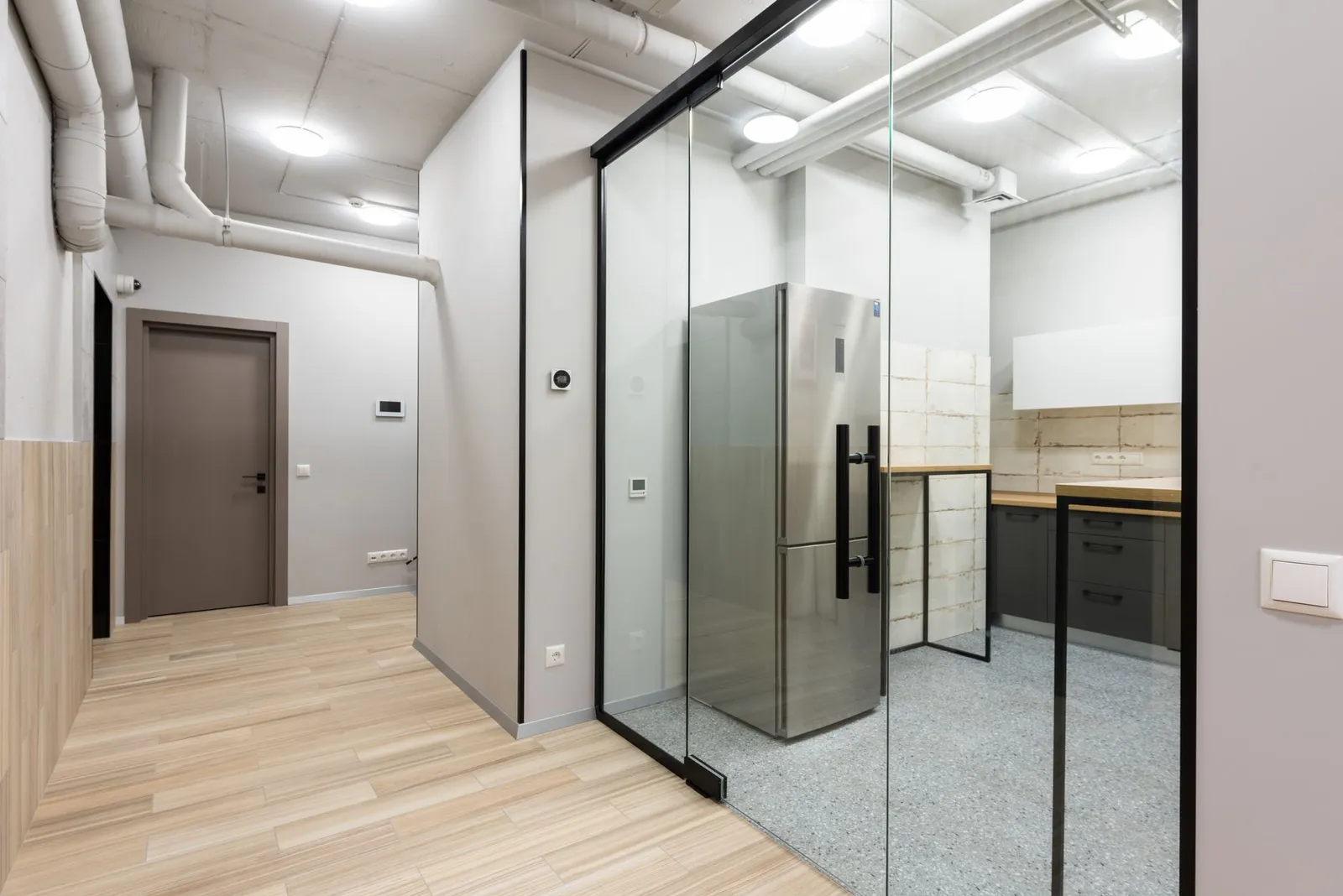
Putting together a clear brief for office partition film saves time, avoids mismatched expectations, and gives an installer the information needed to prepare a realistic proposal. The core task is straightforward: map every internal glass surface, record your visibility and design preferences for each zone, ask about reviewing an installed sample in your occupied space, and then document the agreed scope in writing before work begins.
Mapping Meeting Rooms and Internal Glass Areas
Begin with a simple floor-plan sketch or a marked-up PDF of your office layout. For each internal glass partition or sidelight, note:
- Location: which room, corridor, or open-plan boundary it serves
- Approximate dimensions: height and width of the glazed panel (or the number of panels if they repeat)
- Glass type if known: frameless, aluminium-framed, sliding, fixed
- Existing treatments: current frosting, existing film, manifestation dots, or applied vinyl
You do not need to measure to the millimetre at this stage — that is part of the installer’s site measure — but a rough record of which areas are in scope prevents the proposal from omitting panels that matter to you, or pricing panels you have no intention of treating.
If your tenancy spans multiple floors or wings, identify each separately. Access arrangements often differ between floors, and an installer quoting across a large footprint will want to know whether areas can be cleared of furniture or whether work must happen outside business hours.
Describing Visibility and Design Preferences
Privacy film for office partitions is not a single product. Decorative glass films such as the 3M FASARA range are described in manufacturer technical documentation as being available in over 100 designs for use in vertical applications in commercial buildings to control both light and privacy through a building’s interior glass. The documentation describes a wide range of light transmission across the designs. Ask for the exact proposed product reference, its relevant manufacturer information and an appropriate sample; the range description does not establish the appearance or privacy performance of a particular design in your office.
For your brief, you do not need to specify a product code — that decision belongs with the installer — but you should be able to answer:
- How much can people see through? Full opacity (no visual connection), diffuse (shapes visible, detail not), or partial (a band or pattern that breaks line of sight without blocking light entirely)
- Is daytime-only privacy sufficient, or does the room need evening privacy too? Ask to compare the actual proposed sample in your office under the day and evening lighting conditions that matter to users. Request any relevant manufacturer information for that exact product rather than assuming one film example establishes another design’s performance.
- What aesthetic are you aiming for? Frosted, textured, patterned, branded, or a combination
- Are there glass areas you want to leave completely clear? Glazed sidelights beside entry doors, for example, may serve a safety or wayfinding function that you want to preserve
Note these preferences area by area. A boardroom may warrant full-height film; a small collaboration room might only need a mid-height privacy band; a glass-walled phone booth may need complete treatment.
Questions About Samples in the Occupied Office
Viewing a small sample card in an installer’s folder gives only a partial picture. The same film can read differently depending on the ambient light in your particular office, the direction the glass faces, and the colour of wall or ceiling finishes visible through the partition.
Before committing to a film across a large area, it is reasonable to ask an installer whether they can apply a small installed sample — typically a strip or small section on a less prominent panel — so that you can review the appearance under real working conditions over a day or two. Points worth discussing with the installer:
- Can an installed sample be applied and then removed if the design is not right, and what does the removal process involve?
- Will the sample section need to be re-done if you choose a different design, and is there a cost implication?
- Can the sample be applied to a panel that already has existing film, or does that surface need to be prepared differently?
This is not a standard industry entitlement — it depends on the installer’s process and the product — but raising it early in the proposal conversation is far more productive than raising it after a job has been quoted and scheduled.
Clarifying Artwork, Access, and Installation Scope
If you want company branding, manifestation patterns, or a cut design rather than solid film, make this clear in the brief. The 3M FASARA technical data sheet notes that printing on these products is on a user test-and-approve basis only and that no warranty is made for the quality or durability of printed product. If branded or printed elements are part of your vision, the installer needs to know upfront so the right product and production process is scoped.
Access in an occupied office also needs thinking through:
- Furniture clearance: which side of the partition needs to be cleared, and who is responsible for moving items?
- Working hours: can installation happen during business hours, or does it need to occur outside them?
- IT and cable management: does any equipment sit directly against the glass that would need to be temporarily moved?
- Phasing: if you have a large number of panels, can installation be staged so only one meeting room is out of action at a time?
A note on glazed partitions with specific glass types: decorative partition film of the kind described in the FASARA technical data sheet specifies use on glass substrates only, applied to flat surfaces, and is designed for interior vertical applications. If you have unusual glass — frameless structural glass, glass with an existing coating, or glass in an IGU configuration — flag this in your brief so the installer can confirm compatibility before the proposal is finalised. See our related guide on window film and glass type compatibility for background on why this matters.
A Hypothetical Briefing Scenario
The following is a hypothetical illustration of information gaps only — not a customer story or a predicted outcome.
Imagine a practice manager who marks up a floor plan showing six glazed meeting rooms plus a glass-fronted reception area. For the boardroom she notes: full-height, full opacity, no brand element. For four mid-sized rooms she notes: frosted band from 900 mm to 1800 mm above finished floor, light transmitting above and below. For the reception area she notes: partial coverage with a logo cut-out in the centre panel. She also flags that two rooms have glass that she believes may be an IGU configuration, and that all installation must occur before 7 am or after 6 pm. This level of detail — even as rough notes — allows an installer to arrive at a site measure already understanding scope, constraints, and the questions that need answering rather than starting from scratch.
Recording the Approved Partition Proposal
Once you have reviewed an installed sample (if one was possible), confirmed film selections, and discussed access, the agreed proposal should record in writing:
- Each panel or zone, its location, and the film design or reference approved for it
- Any areas explicitly excluded from the scope
- The access and timing arrangements agreed
- What surface preparation is included (cleaning, existing film removal if applicable)
- Any branding or cut elements and how artwork will be supplied
- What happens if a panel is found during installation to be a different glass type than expected
This written record protects both parties and reduces the chance of a dispute about what was and was not in scope. It is not a legal document review — your business may have its own contract processes — but the more specific the written scope, the fewer surprises on installation day.
For further context on related topics, see our guides on commercial window cleaning access planning and shopfront cleaning frequency planning.
If you would like to explore whether a referral to a film installer who handles office partition work is available, you are welcome to submit an enquiry and we will follow up where we can.
Further Reading
- 3M FASARA Glass Finishes Technical Data Sheet (ANZ, Revision M, December 2019): product description, design range, interior application scope, cleaning and removal guidelines. https://multimedia.3m.com/mws/media/1881979O/fasara-tech-data-sheet-final-anz.pdf
- WFAANZ – Choosing a Film: guidance on asking for test evidence and product warranties when selecting window film in Australia. https://www.wfaanz.org.au/choosing-a-film-2/