Vista Fox · Adelaide window specialists
Body-Corp Window Film Consent Adelaide | Strata By-Laws Guide
By Vista Fox · Published 5 May 2026
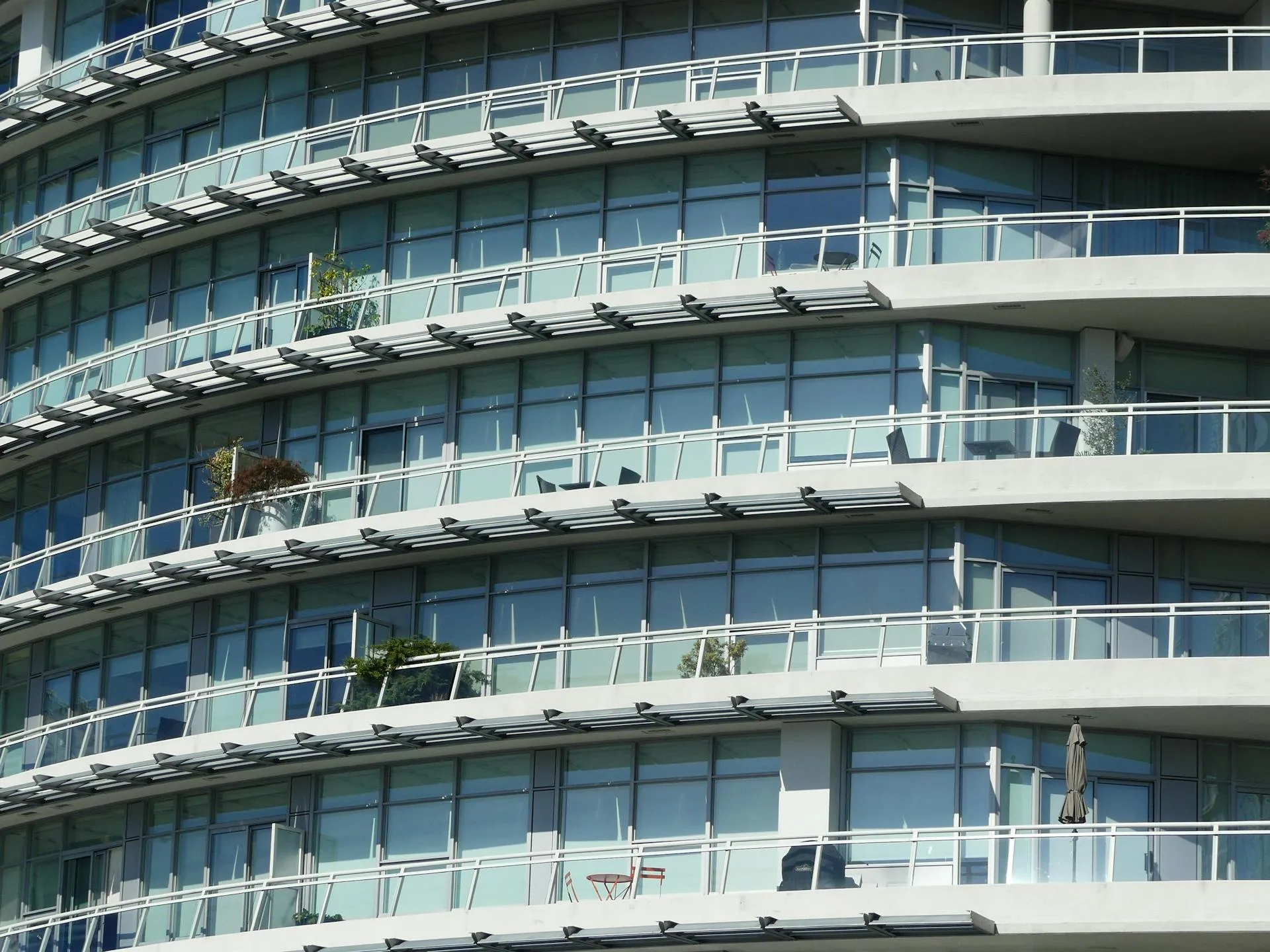
Body-Corp By-Laws and Window Film Consent in Adelaide — A Practical Guide for Apartments, Strata and Mixed-Use
Most South Australian strata schemes treat the external appearance of a building as common property — and that means film on a window facing the street, a public courtyard, or any common-property elevation usually needs body-corporate consent before install. Internal-only film (frosted privacy on a bathroom window with no external visibility, decorative film on an internal partition) usually does not. The legal threshold sits in two acts: the Strata Titles Act 1988 (SA) for strata schemes registered before 1 September 1996, and the Community Titles Act 1996 (SA) for community-title schemes registered after that date. Both treat alterations affecting common property — including the visible external aspect of a building — as needing scheme approval, typically by special resolution, and both vest the day-to-day administration of consent in the strata or community corporation acting through its committee. This article is the practical consent guide. It explains where the SA legal threshold sits, when consent is required, what an application looks like, and how Vista Fox supports the application in practice.
This guide is general information, not legal advice. For a specific scheme’s by-laws and articles, the source of truth is the scheme’s registered articles, the strata or community corporation manager, and (where the situation is contested) qualified strata-law advice. The Law Handbook SA strata section is the standard plain-English reference for owners and is a fine starting point before a formal manager conversation.
The two SA legal frameworks — and which one applies to your scheme
South Australian strata and community-title schemes sit under one of two parallel legal frameworks, and the framework determines which act applies, what’s classed as common property, and what the consent process looks like.
Strata Titles Act 1988 (SA). Schemes registered under the Real Property Act framework as “strata” before 1 September 1996. The Act establishes the strata corporation, the unit-and-common-property structure, the articles of the scheme (which act as by-laws), and the meeting and resolution procedures. Older Adelaide-CBD apartment blocks, North Adelaide period-conversion apartment buildings, and many 1970s-to-1990s walk-up apartment buildings sit under the Strata Titles Act.
Community Titles Act 1996 (SA). The replacement framework for strata-style developments registered after 1 September 1996. Most modern Adelaide apartment buildings (CBD high-rise, Glenelg coastal apartment stock, Norwood and Burnside boutique developments, mixed-use retail-residential blocks) sit under the Community Titles Act. The Act is more contemporary in its drafting and includes more developed provisions for “lots,” “common property,” “scheme description,” and the by-laws each scheme registers.
Both Acts share the same core architecture for the consent question: a unit owner can do what they like inside the boundary of their lot (subject to the scheme’s by-laws), but anything that affects common property — including visible alteration of a façade, addition or alteration that touches a structural element shared with other lots, and any change that alters the building’s exterior aesthetic — requires the corporation’s consent.
The certificate of title for an apartment lot is the primary source: it specifies the lot boundary (typically the inside face of the perimeter walls), identifies common property (typically structural walls, common-area floors, roofs, façades, and shared services), and references the scheme’s articles or by-laws. The strata or community manager holds the registered articles and is the practical first stop for a “do I need consent” question.
Why the window matters — the lot/common-property boundary
The reason window film is a consent question is geometric. A window in an apartment sits on the boundary between the lot and the common property. The internal pane surface is on the lot side; the external pane surface is on the common-property side; the frame is usually common property as a structural element of the building. Film bonded to the inside face of the pane changes the external visible appearance of the building — a tinted reflection from the street is a change in the building’s exterior aesthetic — and that change is what triggers the consent question.
Three sub-questions decide whether consent is needed on a specific install:
1. Is the film visible from a common-property location? If yes — visible from the street, the courtyard, the lobby, an adjoining lot, an outdoor common area — consent is almost certainly needed. The visibility test is the simplest practical test.
2. Does the film alter the building’s exterior aesthetic uniformity? Mirror-finish reflective film on one apartment in a building of clear-glass apartments creates external visual disparity. Even a non-reflective neutral solar film applied to one apartment in a uniform building creates a slight tonal difference that’s visible from the street. The corporation has a legitimate interest in maintaining external aesthetic uniformity.
3. Does the install touch any structural or common element? Most film installs are pane-only and do not touch the frame. Where install requires drilling, fixing, or alteration of the frame (rare for film, common for security-screen retrofits), the consent question becomes harder because the alteration touches common property structure rather than just appearance.
A well-drafted scheme’s articles or by-laws should give clear guidance on the exterior-appearance question. Older Strata Titles Act schemes sometimes rely on the broad “no alteration affecting external appearance” position with little detail; newer Community Titles Act schemes more often have explicit exterior-treatment by-laws that name window film as a category.
When you almost certainly need consent
Five common cases where consent is required as a matter of practical reality:
1. Any film visible from the street. A street-facing apartment with a solar film, privacy film, or decorative film visible to the public is the textbook consent case. Even where the by-laws don’t explicitly name film, the “no alteration to external appearance” provision in almost every SA scheme captures it.
2. Reflective or mirror-finish film. Reflective films are the most aesthetically intrusive category. They change the external look of the pane dramatically — from a transparent dark surface at night to a one-way mirror in daylight. Body-corp managers and committees flag reflective applications most often. Consent is almost always required, and reflective applications are the most often refused.
3. Security film with a visible AS/NZS 2208 compliance sticker. The compliance sticker, affixed to the lower corner of the pane and visible from inside and (faintly) from outside, is a small but visible marker. Schemes with strict aesthetic-uniformity provisions sometimes require sticker placement or visibility specifications in the consent.
4. Signage and printed-graphic film on retail-level glass in mixed-use schemes. Ground-floor retail in a mixed-use building is common-property-adjacent at the façade level. Signage film on the retail glazing affects the building’s exterior aesthetic and almost always requires both body-corporate consent and council development approval.
5. Any film install where you’ve been told by the manager that consent is required. If the manager has flagged it, the route forward is the application — proceeding without consent is the route that ends in a removal order at the owner’s cost.
When consent usually isn’t needed
Three cases where consent is usually unnecessary in practice — though the scheme’s articles remain the source of truth and a quick manager confirmation is always cheap:
1. Frosted privacy film on an internal bathroom or laundry window with no external visibility. A window facing only into a private balcony, a courtyard already screened from common areas, or a light well not visible from any common location. The film changes nothing visible from common property; the alteration is functionally internal.
2. Clear UV-only film on heritage interior glass that is not visible externally. A leadlight panel above an interior door, an internal feature glazing — visible only to the occupant of the lot — does not affect common property. Where the heritage glass is on an exterior elevation visible from the street, the analysis flips back to “consent required.”
3. Decorative film on internal partition glass within the lot. Office partition glass inside the lot, internal doors with glass panels, decorative bands on a shower screen. All entirely within lot boundary, no external visibility, no common-property impact.
The pattern: internal-and-invisible-from-outside is usually fine without consent; visible-from-common-property is usually a consent application. The visibility test is the fastest screen, and a five-minute walk around the building looking at the proposed pane from the street, the courtyard, the lobby, and any neighbouring lot will usually answer the question before the manager call.
How to apply for consent — the standard pack
A well-prepared body-corp consent application closes faster than a half-prepared one. The pack a manager wants to see, in our experience across Adelaide schemes, includes:
1. The product datasheet. The manufacturer’s specification sheet for the proposed film — light transmission, total solar energy rejection, UV cut, reflectivity, expected service life, and the appearance from inside and outside.
2. The manufacturer’s warranty terms. Length, conditions, and what’s covered. Schemes care about the warranty because film failure on common-property-affecting installs becomes a maintenance question.
3. Compliance certifications relevant to the install. Where the film is security-rated, the manufacturer’s AS/NZS 2208 test certificate; where performance figures (heat rejection, energy savings) are claimed, the WERS for Film certificate (AGWA’s WERS framework is the umbrella reference). For the heritage glass case, the AS/NZS 2208 heritage-glass pillar sets out the full compliance picture.
4. Installer accreditation reference. WFAANZ membership and any manufacturer-specific accreditation. Schemes look for trained, insured, manufacturer-recognised installers.
5. Installer’s public-liability and contract-works insurance. $20 million PLI is the modern minimum on body-corp work; some schemes specify higher. Certificate of currency attached to the application.
6. The install protocol. Method statement covering pre-clean, application, edge trimming, cure period, and the AS/NZS 2208 compliance sticker placement (where applicable). This addresses the manager’s “how will the work be done in our building” question.
7. A photographic mock-up or sample. Where reflectivity or appearance is at issue, a sample film panel held against the pane in question, photographed from common-property locations, removes the speculation from the consent decision. Many committees approve faster on a photo than on a verbal description.
8. The IGU compatibility statement. Where the apartment has insulating glass units (most modern Adelaide apartments do), the manufacturer’s written compatibility statement for the specific IGU configuration. The film-on-IGU article explains why the compatibility check matters and the thermal-stress crack risk on the wrong combination.
The consent decision then sits with either the committee under delegated authority (for many routine installs) or the full corporation by special resolution (for installs with significant exterior-appearance impact, or where the by-laws specifically reserve film consent to the corporation).
The practical timeline: a well-prepared application, sent to the manager with the full pack attached, typically returns a committee decision in four to eight weeks. A half-prepared application that triggers questions and a documentation chase can run three to four months. The single biggest accelerator is the photo mock-up — it converts the “we don’t know what it’ll look like” objection into a decision.
What body-corp managers most often push back on
Across SA strata and community schemes, the four most common consent objections we’ve seen:
1. Mirror or high-reflectivity finishes. The aesthetic uniformity argument bites hardest here. A reflective film on one apartment in a building of clear-glass apartments creates a visible disparity — the building reads as “one apartment is different” from the street. Schemes routinely refuse high-reflectivity applications and sometimes counter-propose a neutral non-reflective solar film as a compromise.
2. A single owner’s choice that breaks aesthetic uniformity. Even non-reflective films can create a visible tonal disparity on a uniform façade. Where the scheme has invested in maintaining a single exterior look, a single-apartment film install is sometimes refused on aesthetic-uniformity grounds. The compromise is often a whole-building film retrofit (commissioned by the corporation, applied to every apartment) — see the next section.
3. Warranty coverage on common property. If the film is judged to be common-property-adjacent (the building’s external appearance), the manager wants to know who’s responsible for warranty claims, replacement, and remediation. Owners with film installed under their own warranty leave a question mark for future committees. Some schemes require warranty assignment to the corporation; some don’t.
4. Installer credentialing. Schemes increasingly want WFAANZ-accredited and manufacturer-trained installers, with documented PLI. The lowest-cost-quote applicant who arrives without insurance documentation or accreditation gets a fast refusal.
The applicant who pre-empts these four with the standard pack — neutral or low-reflectivity product, photo mock-up, manufacturer warranty terms, accredited installer with documented insurance — converts the consent decision into a routine sign-off rather than a contested debate.
When the body-corp commissions the film job (rather than an individual owner)
Three patterns where the corporation, not the individual owner, is the customer for the film install:
1. Whole-building solar film retrofit. The corporation decides to install a uniform solar film across every apartment to address building-wide thermal performance, energy bills, or summer-comfort complaints. The install is commissioned by the corporation, paid through the strata levy or a one-off special levy, and applied across all units to achieve uniform external appearance. This is a special-resolution decision under both Acts; quotes go through the manager’s tender process.
2. Signage film at retail level in mixed-use schemes. A retail tenant or the building manager installs branding film on ground-floor commercial glazing. The work touches common property and usually requires both corporate consent and council development approval; the corporation’s approval is typically conditional on the signage matching the building’s overall aesthetic standard.
3. Anti-graffiti film on ground-floor commercial. Where the corporation has elected to protect ground-floor glass from graffiti damage, a sacrificial anti-graffiti film is installed across all ground-floor glazing as a building-wide maintenance measure. Owner-side consent is generally not required — the work is corporation-commissioned on common property — but tenant notification typically is.
In each case the commercial tinting service handles the corporation-customer pattern, and Vista Fox engages directly with the strata or community manager on quote, scope, and install scheduling. The residential tinting service handles the individual-owner pattern.
How Vista Fox supports the application
Two practical commitments on every body-corp consent application Vista Fox runs alongside:
1. We provide the documentation pack the manager asks for. Datasheet, warranty terms, AS/NZS 2208 certificate, WERS for Film certificate, installer accreditation, insurance certificate, install protocol, IGU compatibility statement. We send it to the customer in a single PDF the customer forwards to the manager unchanged. No assembly burden on the owner.
2. We attend a body-corp meeting if useful. For larger or contested applications — a feature glazing on a heritage façade, a security-film install with public visibility, a whole-building retrofit at quote stage — we attend the committee or annual general meeting at the customer’s request. Direct conversation with the committee resolves more questions in 20 minutes than a four-week email chain does.
Vista Fox works with Strata Community Australia (SA)-listed managers across Adelaide and accepts manager-led tenders for whole-building work where the manager runs SCA SA’s quote-routing platform.
Common Adelaide scenarios
- CBD high-rise apartment, single owner wants solar film on west-facing IGU. Consent required (visible from external, IGU compatibility check needed). Standard pack, neutral non-reflective film, manager approves on routine committee turn. Often four to eight weeks. (See the Glenelg coastal apartment IGU case study for the comparable coastal pattern.)
- North Adelaide period-conversion apartment, owner wants UV protection on internal heritage leadlight. Consent usually not required (no external visibility on internal feature glazing). A manager confirmation in writing is still cheap insurance.
- Mixed-use Glenelg ground-floor retail, tenant wants signage film. Consent required from the corporation and council development approval. Run both in parallel; the corporation usually waits for council confirmation before signing off.
- Older Strata Titles Act block, single owner wants reflective privacy film on bathroom facing the street. Consent required, likely to be refused on reflectivity grounds. Compromise: neutral frosted film achieves the privacy without the reflective-finish objection. Re-submit with the frosted spec.
- Modern Community Titles Act apartment block, corporation considering whole-building solar-film retrofit. Special-resolution decision, manager-led tender, multiple quotes through SCA SA’s platform, install scheduled across all units once approved.
Frequently asked questions
Do I need body-corp approval for window film in my Adelaide apartment?
Usually yes, where the film is visible from common property — the street, the courtyard, the lobby, an adjoining lot. The Strata Titles Act 1988 (SA) for older schemes and the Community Titles Act 1996 (SA) for newer schemes both treat changes to the building’s external appearance as common-property alterations requiring scheme consent. Where the film is purely internal and not visible from any common-property location (a bathroom window facing only a private balcony, decorative film on internal partition glass), consent is usually unnecessary. The scheme’s registered articles or by-laws are the source of truth; the manager is the practical first stop.
What if I rent the apartment — does the tenant need consent or the owner?
The tenant cannot grant consent for a common-property alteration; only the owner of the lot can apply, and the corporation grants the consent. A tenant who wants film installed on a rental apartment needs the owner to make the application — and the owner needs the corporation’s consent before the install. Practically, most landlord-tenant film conversations end in the landlord refusing because the application is more administrative work than the rental relationship justifies; the workable answer for tenants is removable interior treatments (curtains, blinds, removable static-cling film) that don’t affect the building.
Can the body-corp force every owner to install the same film?
Yes, by special resolution under both the Strata Titles Act 1988 (SA) and the Community Titles Act 1996 (SA), the corporation can resolve to undertake a whole-building film retrofit for thermal, energy, or aesthetic reasons. The cost is paid through the strata levy or a one-off special levy, and the install is scheduled across all units. Individual owners cannot opt out of a properly resolved whole-building improvement — that’s the trade-off of the strata structure.
Who pays for whole-building film — the corporation or each owner?
The corporation pays out of strata levies (recurring) or a special levy raised for the project (one-off). The cost is then shared across the lots in proportion to the unit-entitlement schedule registered with the scheme. Individual owners do not pay the installer directly for whole-building work; they pay the corporation through the levy.
What about commercial mixed-use schemes — does the consent process differ?
The consent process is broadly the same — both Acts cover commercial and mixed-use schemes — but two practical differences apply. First, signage and branded-graphic film on retail glazing usually triggers a parallel council development-approval requirement that residential film does not. Second, the commercial tenant relationship adds a contractual layer (lease provisions on signage, alterations, and reinstatement at end of lease) that needs to be navigated alongside the body-corp consent. The application pack is similar; the timeline is usually longer because two approvals (corporate and council) run in parallel.
Sources
- Government of South Australia — Strata Titles Act 1988 (SA)
- Government of South Australia — Community Titles Act 1996 (SA)
- Law Handbook SA — Strata and Community Titles
- Strata Community Australia — SA Division
- WFAANZ — WERS for Film accreditation program
- AGWA — How WERS Works