Vista Fox · Adelaide window specialists
Glenelg Apartment IGU Solar Film Case Study | Vista Fox
By Vista Fox · Published 5 May 2026
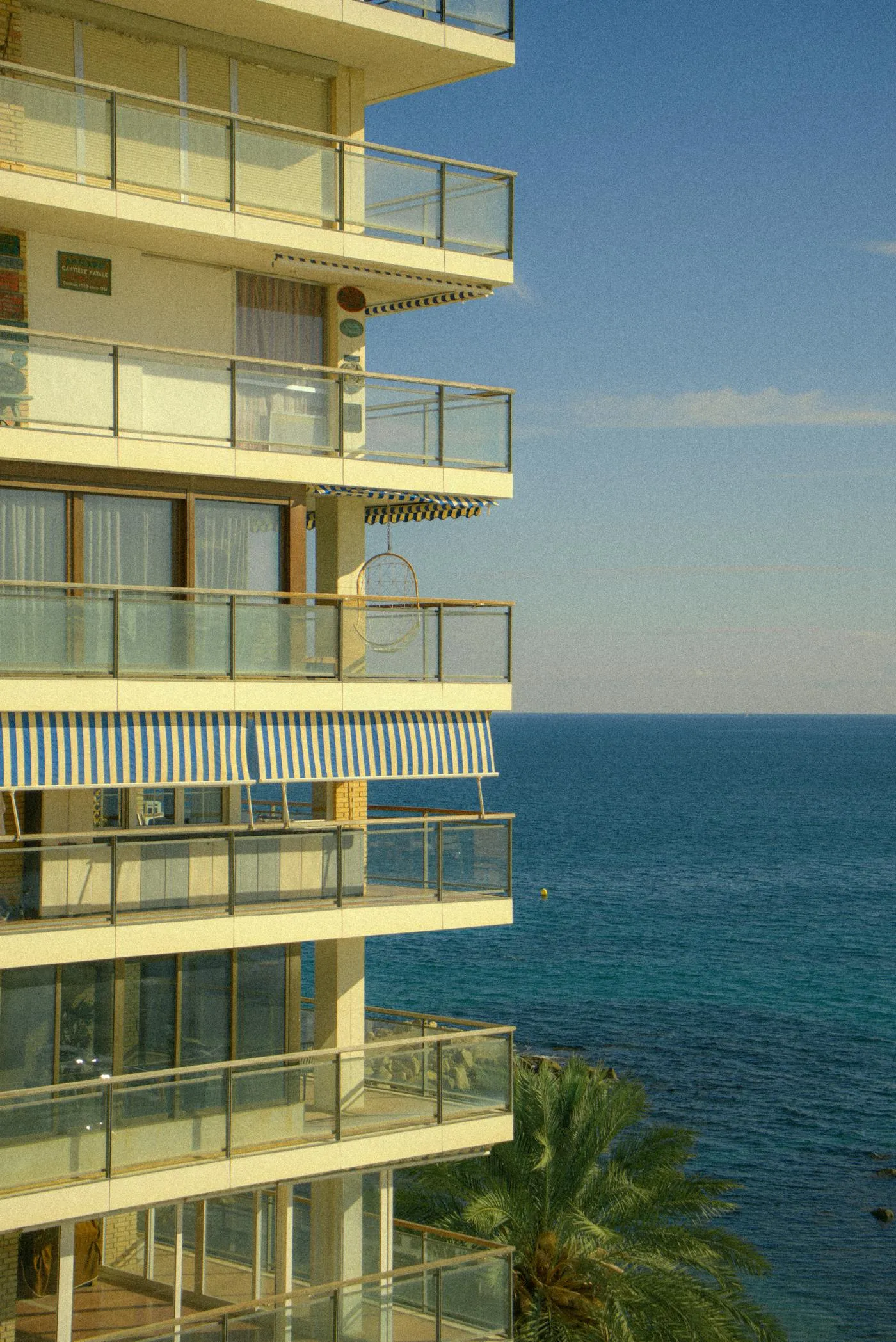
Glenelg Coastal Apartment Case Study — Solar Film on a West-Facing IGU Without Cracking the Pane
A Glenelg apartment solar film install on a post-2015 Holdfast Shores-style west-facing insulating glass unit (IGU) faced two real risks: thermal-stress fracture of the inner pane if the wrong film was specified, and a body-corp consent path that adds two to four weeks if not handled cleanly. The brief — fix the afternoon heat without losing the Gulf view and without breaking the double-glazing — was solved with a low-absorption nano-ceramic spectrally-selective film, manufacturer IGU compatibility documentation, and a two-day install scheduled around the body-corp’s lift booking. Cost band on a job of this kind sits at $1,800 to $3,500. This is a worked example of how solar film on a coastal apartment IGU runs in Adelaide — what the compatibility check looks like, what the body-corp wants to see, and what the owner gets back at handover.
Vista Fox is a WFAANZ member and a WERS for Film accredited installer. Glenelg, Holdfast Shores, Glenelg North, Brighton and the Holdfast Bay coastal strip are the strongest west-facing solar-film market in metro Adelaide — and post-2015 IGU stock is now the dominant glazing type on the apartment side of that map.
The brief
The owner’s brief was practical and specific: a post-2015 Holdfast Shores-style two-bedroom apartment, west-facing floor-to-ceiling living-room glazing onto the Gulf, afternoon temperature peaking 35°C+ even with the air-conditioner running. The owner wanted to fix the heat without losing the view and without putting the IGU at risk. The previous owner’s body-corp had quietly knocked back a quote from a non-accredited installer eighteen months earlier because the documentation was wrong.
The constraints behind the brief:
- The view is the asset. A reflective or mirror-finish film would have been wrong — the Gulf-facing aspect is why the owner bought the unit. VLT preservation was non-negotiable.
- The IGU is at risk. Apply the wrong solar film to a sealed double-glazing unit and you change the thermal expansion profile of the inner pane. Inner pane fractures from film-induced thermal stress are a real failure mode and are documented in the manufacturer compatibility charts every reputable architectural film line publishes.
- The body corp had to approve. A west-facing apartment’s external appearance is common-property under most Adelaide strata schemes. Film on a street-visible (or Gulf-visible) elevation almost always needs by-law consent.
The IGU compatibility check
Before quoting a film on an IGU, Vista Fox runs a compatibility check that has three parts. On this job:
Existing pane configuration:
- Outer pane: 6mm clear annealed
- Spacer: 12mm argon-filled aluminium spacer with low-conductivity warm-edge
- Inner pane: 6mm low-emissivity (low-E) coated
- Manufacturer: post-2015 Australian IGU production batch with traceable warranty
Compatibility variables checked:
- Total solar absorption (with film) vs IGU manufacturer cap. The IGU manufacturer publishes a maximum total absorption figure for the assembly. Add a high-absorption dyed film and you can exceed it; the inner pane heats faster than the outer, the differential thermal expansion grows, and the inner pane is at risk of edge-stress fracture.
- Film/glass thermal expansion match. Spectrally-selective nano-ceramic films at low absorption (well below 50% of incident solar) sit comfortably inside the manufacturer’s compatibility envelope on most modern IGUs. High-absorption dyed films do not.
- Manufacturer pairing list. The film line we specified publishes an IGU compatibility chart by glass type and spacer width. The pane configuration we found sat in the “approved” column for the film grade we chose.
For the deeper technical territory on this — when film is safe on double-glazing and when it isn’t — see film on IGU / double-glazing in Adelaide. The short version: low-absorption ceramic spectrally-selective films are the safe path on most modern IGUs; high-absorption dyed films are not the right specification on a double-glazed assembly.
Film specification
The product selected was a low-absorption nano-ceramic spectrally-selective architectural film. The numbers on the manufacturer datasheet:
- Total Solar Energy Rejected (TSER) — approximately 70%
- Visible Light Transmission (VLT) — approximately 50% (Gulf view preserved, daylight retained)
- Solar Heat Gain Coefficient (SHGC) — dropped from approximately 0.65 (unfilmed IGU) to approximately 0.30 (filmed IGU)
- UV block — 99%+
- Reflectivity — low-reflectance interior face (no mirror finish externally; no body-corp visual disparity)
- Manufacturer IGU compatibility — documented in writing for the existing pane configuration
- Manufacturer warranty — 12 years residential with explicit IGU compatibility cover (the manufacturer underwrites the IGU position, which is the documentation the body-corp wanted on file)
- WERS for Film performance certificate — issued for the installed film/glass combination
For the broader explanation of why a nano-ceramic spectrally-selective film is a different product to a sputtered-metal or dyed solar film, see the construction explainer at sputtered vs ceramic vs dyed film. The architectural-film cost-pillar window tinting cost in Adelaide 2026 walks through where each film grade sits in the per-m² band.
Install logistics in a body-corp building
A two-bedroom apartment install in a body-corp building isn’t a half-day residential job. The protocol Vista Fox runs:
Body-corp consent (4 to 6 weeks before install):
- Application to the body-corp manager (the strata scheme’s by-laws govern this — the practical guide is in body-corp by-laws and window film consent in Adelaide)
- Documentation pack provided to the manager:
- Manufacturer datasheet
- WERS for Film performance certificate
- IGU compatibility statement
- Installer accreditation (WFAANZ membership, WERS for Film)
- Install protocol document (lift booking, common-property protection, after-hours window if requested)
- Reflectivity reading (the body-corp’s biggest concern is usually visual disparity between units — a low-reflectance film documented at sub-10% exterior reflectivity addresses this in writing)
Install day logistics:
- Lift booking with the building manager — a 90-minute window for crew gear movement at the start of day one
- Common-property floor protection from the lift to the apartment door
- Apartment-side floor protection on the polished-concrete floor and the carpet runner in the bedroom hallway
- Window-track and frame protection during the cleaning sequence
- Install over two days — day one is the pre-clean, the dry-lay templating, and the kitchen sliding-door panel; day two is the floor-to-ceiling living-room panel with two-person lift handling
Documentation handed back:
- Manufacturer compliance sticker affixed in a discreet corner of each filmed pane
- Body-corp file copy of the install record with photographs
- Manufacturer warranty document with IGU compatibility position confirmed in writing
- WERS for Film certificate
Outcome
The handover record on the job:
- Afternoon temperature drop — peak surface temperature on the inside face of the IGU dropped approximately 6°C measured against pre-install reference at 4pm summer conditions
- Cooling load delta — energy modelling on the SHGC change (0.65 → 0.30) suggests a meaningful afternoon cooling load reduction; the lived experience reported by the owner was “the air-con cycles half as often”
- Gulf view preserved — VLT 50% retained the daylight and the view-through across the Gulf St Vincent; the camera-test photo at handover reads as the same view, just less glare
- IGU warranty position — the manufacturer’s compatibility statement and the IGU manufacturer’s response (where required by some bodies-corp) confirmed the warranty position in writing
- Body-corp file — all documentation logged with the manager; the install set a precedent for two other unit owners in the same building who booked Vista Fox within four weeks
For the broader thermal-comfort context on west-facing Adelaide glass, see the heat pillar west-facing window heat in Adelaide. The Bureau of Meteorology publishes the Adelaide UV index forecast and the cooling-degree-day data that underpins the heat profile of the Holdfast Bay coastal strip.
Cost and what drove it
The cost band for a solar film job on a west-facing apartment IGU on the Holdfast Bay strip typically lands in the $1,800 to $3,500 range depending on:
- Glass area. A floor-to-ceiling living-room IGU plus a kitchen sliding door is usually 12 to 20m² of treated glass. A two-storey loft apartment runs higher.
- Film grade. Nano-ceramic spectrally-selective product sits at the upper end of the per-m² band (the right call for IGU compatibility); a dyed film is cheaper but is the wrong specification on this glass type.
- IGU compatibility documentation overhead. The compatibility check, the manufacturer pairing statement, and the body-corp documentation pack add labour that a non-IGU residential job doesn’t carry. That overhead is typically 4 to 8 hours on a single-unit install.
- Body-corp consent path. Where consent is straightforward, no extra cost; where it requires a strata-meeting attendance or a manufacturer rep walk-through, a small premium covers the time.
- Access. Lift booking, after-hours scheduling, and common-property protection all add. Most Holdfast Shores buildings are well-set-up for crew access; older 1990s blocks with no lift or restricted access run higher.
The premium on a nano-ceramic IGU-compatible install over a baseline dyed solar film is real — usually $400 to $900 across a typical apartment’s worth of glass — and it’s the right call. A dyed film on this IGU profile is a thermal-stress crack waiting to happen. A cracked inner pane on a sealed IGU is a $1,500 to $4,000 unit replacement that no film warranty covers if the wrong film was specified.
For the cost picture across the rest of the residential and commercial film spectrum, the window tinting cost in Adelaide 2026 pillar walks through every job type’s strategic band.
Why September is the booking month for this kind of job
Solar-film install lead times on the Adelaide coastal strip stretch from one to two weeks in spring to four to eight weeks at peak summer. Body-corp consent paths add another two to six weeks on top of the install lead. An owner who books a Glenelg apartment IGU solar film install in September gets the install done before the first 38°C day in November; an owner who books in December starts with the consent path and is usually still suffering through January waiting for the install slot.
The pre-summer prep window is the practical reason this job ran cleanly — the owner started the consent paperwork in early September, the install ran the first week of October, and the cure window was complete before the November heat curve started. See the timing piece pre-summer west-facing window prep in Adelaide for the booking-window detail.
FAQ
Can I put solar film on a Glenelg apartment IGU?
Yes — provided the film is compatible with the IGU’s pane configuration. The compatibility check looks at total solar absorption (which the film changes), the manufacturer’s published cap for that IGU type, and the spacer geometry. Low-absorption nano-ceramic spectrally-selective films are typically the safe path on modern IGUs; high-absorption dyed films are typically not. A reputable installer runs the compatibility check before quoting and provides the documentation in writing. If a quote skips the compatibility statement, the quote isn’t properly specified for an IGU.
Will solar film crack my double-glazing?
A film outside the IGU manufacturer’s compatibility envelope can — through differential thermal expansion between the inner and outer panes when one absorbs more solar than the assembly was designed for. A film inside the compatibility envelope does not. The risk is not the act of applying film; the risk is applying the wrong film to the wrong IGU. The Vista Fox compatibility protocol, manufacturer pairing chart, and warranty pass-through addresses this in writing every time.
Will solar film darken my Gulf view?
A nano-ceramic spectrally-selective film at VLT 50% rejects approximately 70% of the solar energy while passing about half the visible light through. The view reads as the same view, just with the glare cut. Higher VLT options (60% to 70%) preserve more daylight at the cost of slightly less heat rejection — the right balance depends on the owner’s afternoon comfort priority. A reflective or mirror-finish film would change the view; a clear or light-tinted spectrally-selective film does not.
Does the body corp need to approve solar film on a Glenelg apartment?
In most cases, yes — west-facing apartment glass is street-visible (or Gulf-visible), which usually means the external appearance falls under common-property under the building’s by-laws. The standard application includes the manufacturer datasheet, the WERS for Film performance certificate, the IGU compatibility statement, and the installer’s accreditation evidence. Vista Fox provides the documentation pack as part of the quote and will attend a body-corp meeting if useful. The fuller framework is in body-corp by-laws and window film consent in Adelaide.
How long until solar film pays back in cooling savings on an apartment?
The payback period varies with how often the apartment is occupied during peak summer afternoons, the air-conditioner’s efficiency, and the energy plan. A west-facing Glenelg living-room IGU dropping SHGC from approximately 0.65 to 0.30 typically reduces afternoon cooling load by a meaningful margin. Owners who run the air-con most summer afternoons report payback in three to five summers; owners who use the apartment intermittently report a longer payback but the comfort improvement is the headline value. The cooling saving is the bonus, not the brief.
Sources
- WFAANZ — WERS for Film accreditation
- AGWA — How WERS Works
- Bureau of Meteorology — Adelaide UV Index Forecast
- Manufacturer IGU compatibility charts (3M / Llumar / Solar Gard nano-ceramic spectrally-selective film lines — referenced at quote stage by product)