Vista Fox · Adelaide window specialists
Window Film vs Blinds vs Awnings vs Replacement Adelaide | Vista Fox
By Vista Fox · Published 5 May 2026
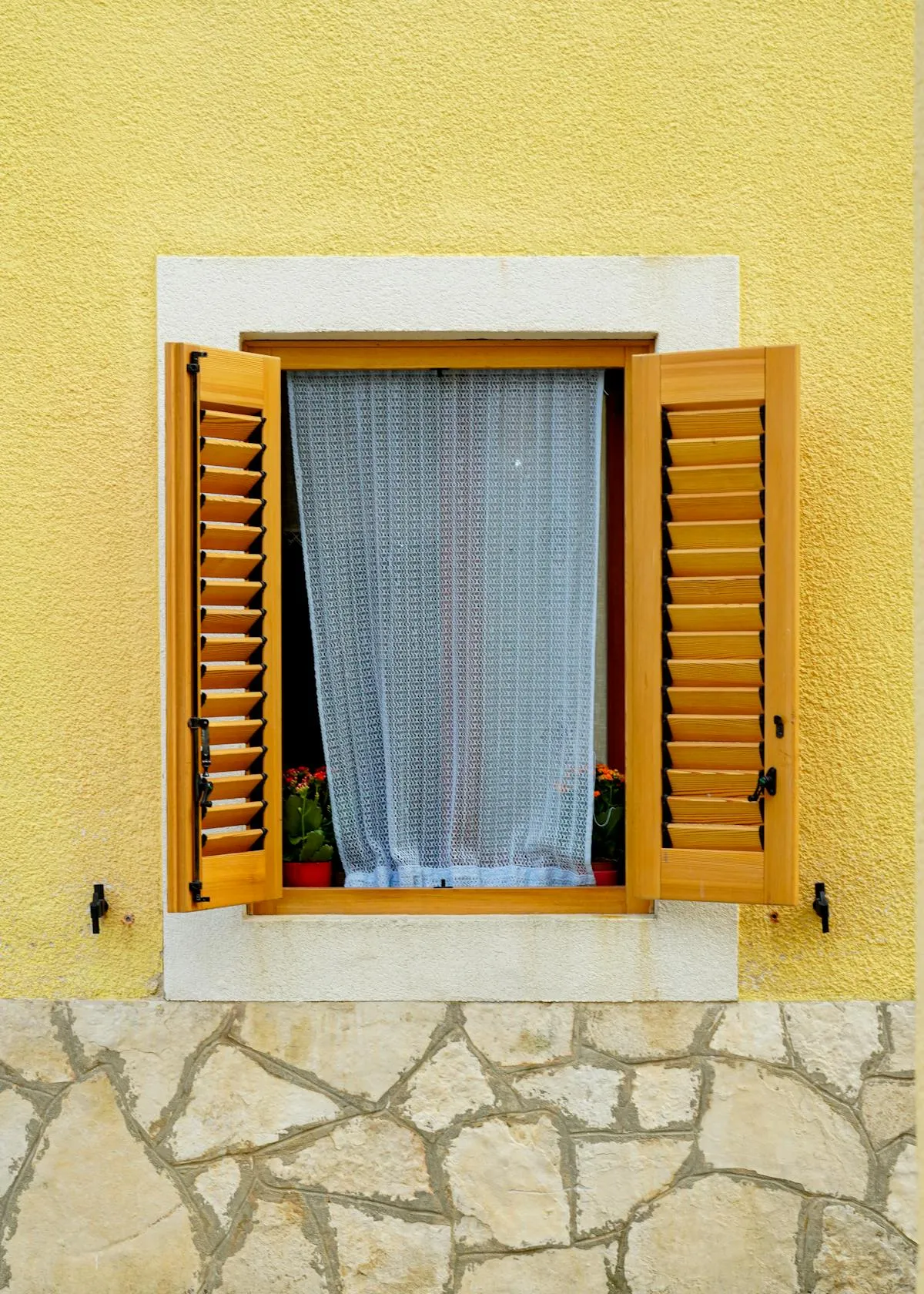
Window Film vs Blinds vs Awnings vs Replacement Glazing in Adelaide — The Decision Matrix
Each option solves a different combination of heat, glare, fade, privacy, view and aesthetic — and the honest answer is that none of the four wins on every variable. Window film keeps the view and works invisibly while controlling heat and UV. Blinds and curtains give controllable privacy and glare on demand but block the view when closed. Awnings stop heat outside the glass — the most thermally efficient solution — but permanently change the look of the building. Replacement glazing (low-E IGU) delivers the best raw thermal performance and the highest cost. Most Adelaide homes that get this right pick a combination, not a single solution. This article is the comparison Vista Fox would write if it had no commercial position — and we actually don’t, because film is the right answer on some windows and the wrong answer on others. Below is the honest decision matrix.
If your goal is just “fix the west-facing room before next summer,” skip to the decision-matrix table near the end. If you want to understand which option earns its place on each variable, read through.
The five things you might be solving for
Almost every owner who searches “window film vs blinds” is solving for a combination of these five:
- Heat — the room is unusable in summer afternoons; surface temperatures on the inside of the glass climb above 50°C; the air-conditioning runs all day and still loses
- Glare — the TV is unwatchable, the laptop screen is unreadable, the dining table is squinty at 4pm
- Fade — the floorboards, the curtains, the sofa, and the artwork on the west wall are losing colour over years
- Privacy — the kitchen looks straight into the neighbour’s outdoor entertaining area, or the street can see directly into the bedroom
- Aesthetics — the pane needs to look right from the inside, from the outside, and inside the building’s overall façade language
Most owners want three or four of the five. Almost no one wants only one. That’s the reason the decision matrix exists — different options score differently across the same five variables, and the right choice is the option that scores best on the three or four that matter for this room on this aspect.
The Bureau of Meteorology’s Adelaide UV index and cooling-degree-day pattern show why the heat and fade variables matter more here than in cooler climates: extreme UV plus consistent 35°C+ summer afternoons drive both. A west-facing room in inner Adelaide isn’t a “nice to fix” — it’s a “fix or stop using it for three months a year.”
Window film — where it wins and where it loses
What window film does: an applied polyester film bonded to the inside face of the existing pane, manufactured with metallised, ceramic, or dyed layers that selectively reject solar heat (infrared and UV wavelengths) while passing visible light. Performance is measured under WERS for Film and AGWA’s WERS framework, which rates films by total solar energy rejection, visible light transmission, and UV cut.
Where film wins:
- You want to keep the view. Film is the only treatment that works while letting you see straight through. A correctly specified solar film can cut 60 to 80 per cent of total solar heat at the pane while leaving the view essentially unchanged.
- The view is the asset. Hills foothills, ocean glimpse, mature garden, city skyline — anything the owner bought the house for. Film respects it; blinds and awnings interrupt it.
- Fade is a real problem. Premium architectural films cut more than 99 per cent of UV-A and UV-B. That’s a higher UV-rejection figure than most blinds and curtains achieve in their down position, because the protection runs at the glass instead of behind it. (See leadlight UV protection film in Adelaide for the conservation case.)
- Heritage façade aesthetics are non-negotiable. A heritage Norwood villa with original leadlight cannot have an aluminium awning bolted across the front sidelight. Film is invisible from the street; the heritage character holds.
- You want a one-time install, not an ongoing operating decision. Film is set-and-forget. You don’t open and close it twice a day.
Where film loses on its own:
- You want full nighttime privacy from the same window. Film alone won’t do both. A reflective solar film looks like a mirror from the brighter side — daytime privacy outwards, nighttime privacy inwards (the lit room becomes the brighter side). Frosted privacy film delivers privacy permanently but at the cost of view-through. If you need view by day and full privacy by night, film alone is the wrong answer — pair it with curtains or blinds.
- You want adjustable glare control through the day. Film is a fixed value of light transmission. If you want the room dim at 4pm and bright at 6pm, an adjustable treatment (blinds, curtains) handles the variability film cannot.
- The pane is on a marginal IGU you haven’t checked. A poorly chosen film on a sealed double-glazed unit can crack the inner pane through thermal stress. The film-on-IGU article covers the compatibility check.
- You want the cheapest possible heat fix. A budget reflective blind is cheaper to buy than a premium architectural film. Film wins on lifetime cost-per-year and on performance, but not on day-one cheapest.
The Vista Fox honest position: film is the best single answer when keeping the view matters and the room is in regular daytime use. It’s not the answer when the requirement is full nighttime privacy from a glassed bedroom or when the owner is solving for adjustability above all else.
Blinds and curtains — where they win and where they lose
What blinds and curtains do: an interior treatment behind the glass that physically blocks light, view, and (to varying degrees) heat. Roller blinds, Roman blinds, plantation shutters, vertical blinds, sheer curtains, blockout curtains, day-night blinds. Operating mechanism either manual (chain, cord, wand) or motorised.
Where blinds and curtains win:
- Adjustable privacy on demand. The single biggest win. Blinds open for view; blinds close for privacy. Film cannot replicate that.
- Full nighttime privacy in any pane that has it as a hard requirement — bedrooms, bathrooms, ground-floor street-facing kitchens.
- Glare control through the day. A well-installed venetian or roller adjusts the room’s light through the afternoon as the sun moves. Film has no adjustability.
- Aesthetic dressing that matches the interior style. Curtains read as part of the interior design language; film is invisible. On a feature window in a heritage room, curtains complete the picture.
Where blinds and curtains lose:
- Closed = no view. Once the blind is down for privacy or glare control, the view is gone. On a window where the view is the asset, the blind is in tension with the reason the window exists.
- Heat is partly addressed, not fully. Blinds inside the glass do reduce solar heat reaching the room — but the heat has already passed through the glass into the air gap between the glass and the blind. The blind warms up, re-radiates the heat into the room, and the surface temperature of the glass itself remains high. Australia’s Energy department insulation guidance puts this clearly: heat-blocking treatments work best outside the glass, not behind it. Internal blinds are partial heat control, not full.
- UV protection is partial and only when down. A drawn blockout blind cuts UV well; a sheer curtain or a venetian in its open position barely touches UV. Fade protection on the floor and furniture below the window depends on the blind being closed during peak UV hours, which conflicts with the view-and-light reasons most rooms have windows.
- Operating overhead. Manual blinds need to be opened and closed. Motorised blinds need power and maintenance. Both have a service life — fabric fades, motors fail, cords break.
- Dust collection. Blinds collect dust at a rate film does not.
The Vista Fox honest position: blinds and curtains win on adjustable privacy and full nighttime privacy. They lose on heat (partial only) and UV (only when closed). They are often the right answer alongside film, not instead of it.
Awnings and pergolas — where they win and where they lose
What awnings and pergolas do: an external treatment that intercepts solar heat before it reaches the glass. Retractable canvas awnings, fixed metal awnings, louvred pergolas, eaves extensions, exterior shade sails. The principle is simple — the most thermally efficient way to keep solar heat out of a room is to stop it hitting the glass in the first place.
Where awnings and pergolas win:
- Best raw heat performance. Stopping solar gain before the pane is the gold standard. A correctly designed awning on a west-facing window cuts the room’s afternoon heat load by a margin film alone cannot match.
- The pane stays cool. Surface temperature on the inside of the glass stays close to room temperature, because the glass never gets hot. That eliminates the radiant-heat problem from the inside-pane surface that film mitigates but doesn’t fully eliminate.
- The aesthetic can be intentional. A well-designed awning or pergola completes the architecture rather than fighting it. On the right house, it adds value rather than subtracting it.
- Outdoor entertaining doubles up. A pergola is a heat-control measure and a useable outdoor room. The dollar earns two jobs.
Where awnings and pergolas lose:
- Permanent change to the building’s look. From the inside and outside. On a heritage façade, a fixed external awning is often inconsistent with conservation guidelines. Council and heritage-overlay approvals can apply.
- The view is interrupted permanently. A drop-down canvas awning at full extension covers the upper third of the view. A solid pergola roof eliminates upward view through the affected window. The view-keeping argument that drove an owner to consider film also rules out fixed awnings on the same pane.
- Winter solar gain is blocked too. A permanent awning on a west-facing window also blocks the winter afternoon sun a homeowner wants in July. Retractable and adjustable systems address this; fixed awnings don’t.
- Planning approval can be required. Some council areas require building consent for substantial external awnings or pergolas, particularly in heritage zones, on the street frontage, or above a certain projection.
- Ongoing maintenance. Canvas weathers, motors fail on retractable systems, framework rusts. Maintenance budget is real.
- Cost can exceed film for the same room — a custom retractable awning on a single large window can run $3,000 to $8,000+; the equivalent solar-film job is often a fraction of that.
The Vista Fox honest position: awnings and pergolas win on raw heat performance and on outdoor lifestyle value. They lose where the building’s look or the view is the priority. They are the right answer where heat is the only thing being solved for and the architecture supports the addition.
Replacement glazing (low-E IGU) — where it wins and where it loses
What replacement glazing does: swap the existing single-pane or older IGU for a current low-E (low-emissivity) double-glazed unit. The new unit has a metallic coating on one of the inner pane surfaces that reflects infrared back outwards, plus an inert gas fill (argon or krypton) in the cavity that reduces conductive heat transfer. Performance is rated under the WERS framework the same way film and blinds are.
Where replacement glazing wins:
- Best long-term thermal performance. Modern low-E IGU is the engineered answer to the problem; nothing else gets closer to the theoretical limit.
- Future-proof for energy ratings and resale. A house with low-E IGU on every window meets BASIX-equivalent and current NCC energy targets without retrofitting.
- Acoustic improvement as a free add-on. IGU construction reduces external noise meaningfully — handy on busy roads, near schools, near rail.
- Solves the IGU-failure case. If your existing IGUs have failed (visible condensation between panes, fogging that doesn’t clear), replacement is the only fix — film does not repair a failed seal.
Where replacement glazing loses:
- Cost. Replacement glazing is the most expensive answer of the four — typically 5 to 10 times the cost of an equivalent film job on the same wall, sometimes more. On a heritage frontage with custom-sized openings the cost climbs further.
- Structural disturbance. Removing and re-installing window assemblies disturbs the surrounding fabric — heritage joinery, render, internal architraves. On a 1900s sandstone villa with original timber frames, replacement is a heritage-approval question and often a “don’t” call.
- Lead time. Custom IGU units have a manufacturing and supply lead time measured in weeks to months. Film installs in days from booking.
- Heritage conservation conflict. A heritage-overlay home cannot replace the leadlight bay window with a modern low-E IGU without losing the heritage character and the heritage compliance.
- Often not justified. On most existing Adelaide homes, the marginal performance gain of replacement glazing over a correctly specified solar film plus curtains for nighttime privacy doesn’t justify the cost differential. The exceptions are clear: failed IGUs, full renovation projects already pulling the windows out, very large feature glazings where every percentage point of thermal performance matters.
The Vista Fox honest position: replacement glazing wins on raw long-term thermal performance and on full energy-rating compliance. It loses on cost, on lead time, and on heritage conservation. It is rarely the right answer for a single-room heat problem; it is sometimes the right answer when the windows have already failed or when a major renovation is already opening the openings.
The combinations that actually work in Adelaide
Most well-resolved Adelaide homes don’t pick one of the four. They combine.
Film + blinds. The most common premium-residential combination. Solar film at the glass cuts heat and UV permanently while preserving the view; blinds or curtains close at night for full privacy. The film does the always-on work; the blinds do the on-demand work. View by day, privacy by night, fade protection 24/7.
Awning + film. An external awning over a critical west-facing window plus a UV protective film on the leadlight or on the lower panel that the awning doesn’t fully shade. The awning handles the bulk of the heat; the film handles the UV angle the awning misses and protects the heritage glass underneath. Common on Burnside and Stirling-style homes.
Replacement glazing + film. When a major renovation is already replacing windows with low-E IGU, a spectrally-selective architectural film tunes the performance further and adds privacy or security characteristics the IGU alone doesn’t deliver. Usually the IGU is the structural decision; the film is the performance fine-tune.
Blinds + nothing else (the budget answer). When the budget rules out film and the room isn’t a priority for fade or summer-afternoon use, blinds alone can hold the situation. Honest if the room is a guest bedroom used twice a year. Not honest if it’s the family living room.
Film + nothing else. When the view is the asset, the room has no nighttime privacy requirement (high windows, hill view, no overlooking), and the heat-and-UV problem is the brief. Heritage front rooms with view glass to the garden, north-facing dining rooms with hills view, west-facing apartments with no neighbouring overlook.
The right combination is room-by-room, not house-wide. The kitchen on the street side and the master bedroom on the rear garden don’t need the same answer.
A simple decision matrix table
The matrix below scores each option against the five variables that drive the decision. Reading: ✅ = strong win; ◐ = partial; ❌ = weak / fails on this variable. Cost is approximate retrofit cost order on a typical west-facing residential window.
| Variable | Window film | Blinds / curtains | Awning / pergola | Replacement glazing |
|---|---|---|---|---|
| Heat reduction | ✅ at the glass | ◐ partial, behind glass | ✅ best — outside the glass | ✅ best long-term |
| Glare control | ◐ fixed level | ✅ adjustable through the day | ✅ when extended | ◐ depends on spec |
| UV / fade protection | ✅ 99%+ at the pane | ◐ only when closed | ✅ when extended | ◐ depends on spec |
| Privacy — nighttime | ❌ on its own | ✅ when closed | ◐ partial | ❌ on its own |
| View-through preserved | ✅ always | ❌ when closed | ❌ where it covers | ✅ always |
| Heritage / aesthetics | ✅ invisible from outside | ◐ depends on style | ❌ permanent change | ❌ replaces original glass |
| Adjustability | ❌ fixed | ✅ on demand | ◐ if retractable | ❌ fixed |
| Cost order (relative) | $$ | $ to $$ | $$$ | $$$$$ |
| Lead time | days | days to weeks | weeks | weeks to months |
| Maintenance | low | medium | medium-high | low |
The honest reading: no single column wins every row. A film + blinds combination wins more rows together than any single column does on its own. That’s why the most common Adelaide premium-residential answer is exactly that combination.
Common Adelaide scenarios — where each option lands
- Heritage Norwood villa, west-facing leadlight bay window, owner needs UV protection without replacing the glass. Film. Replacement is a heritage no-go; awning blocks the leadlight; blinds inside the bay don’t address the leadlight at the pane. Solar UV film is the only correct answer. (See the Norwood heritage villa case study.)
- Glenelg coastal apartment, west-facing IGU, body-corp wants no external alteration. Film, with IGU compatibility check confirmed. Awnings on the façade need body-corp consent the manager won’t grant; replacement is a body-corp decision the owner can’t make alone. (Glenelg coastal IGU case study.)
- Burnside entertainer extension, floor-to-ceiling rear glazing, owner wants heat control and the view. Film + retractable external awning. The film handles UV and the daytime heat-at-the-glass; the awning handles peak afternoon heat without permanently changing the look. (Burnside extension case study.)
- Stirling acreage, big west-facing glass, owner wants UV protection and floorboard fade reduction. Film. Awnings would block the rural view that’s the reason the house exists; blinds defeat the same purpose. (Stirling acreage UV film case study.)
- Modern infill in a CBD-edge suburb, all openings are IGU, owner wants summer heat fix and nighttime bedroom privacy. Film + curtains. Film on the living-room glass for heat; curtains on the bedrooms for privacy. Replacement glazing is overkill on already-IGU windows.
- 1990s home with failed IGUs (visible fogging between panes), owner asks if film fixes it. Replacement. Film does not fix a failed seal; the IGUs are at end of life. The conversation moves from film to glaziers.
The pattern: the right answer follows the building, the aspect, the heritage status, the body-corp situation, and the variables the owner is actually solving for — not a single brand position.
Frequently asked questions
Is window film better than blinds?
Better at different things. Film is permanently on, invisible, view-preserving, and excellent on UV and at-the-glass heat. Blinds are adjustable, deliver full nighttime privacy when closed, and handle glare on demand. The most common premium-residential answer in Adelaide is film plus blinds — film at the glass for the always-on work, blinds for the on-demand privacy. They aren’t competing; they’re complementary.
Will an awning work better than film for heat?
For raw heat performance, yes — stopping the sun before it hits the glass is more thermally efficient than rejecting it after the fact. Awnings win on heat. They lose where the view, the heritage façade, the body-corp consent, or the cost rules them out. In practice, a correctly specified solar film delivers most of the heat reduction at a fraction of the cost and disturbance, while preserving the view. Where heat is the only concern and the architecture supports it, an awning is the better answer; where the view, look, or heritage matter, film is.
Should I replace my windows or just add film?
Film unless one of three triggers applies — your IGUs have failed (condensation between the panes, fogging that doesn’t clear); a full renovation is already replacing the windows; or the existing glazing is so poorly performing that the energy-rating uplift justifies the cost. On a typical existing Adelaide home, film delivers most of the practical performance gain at 5 to 10 per cent of the replacement cost, with no structural disturbance and no heritage compliance issue.
Can I have both film and blinds on the same window?
Yes — that’s the most common premium-residential combination. Film bonds to the inside face of the glass; the blind hangs in front of the film and operates normally. The film works whether the blind is up or down; the blind closes for nighttime privacy and glare-on-demand. Combination installs are routine.
What’s the cheapest way to fix afternoon heat in an Adelaide west-facing room?
If the budget is tight: a quality blockout blind kept closed during the worst three hours of afternoon sun handles a single-room emergency. If the budget allows: a correctly specified solar film at the glass, kept clean year-round, plus the blind for nighttime privacy. The film + blind combination is the lowest lifetime cost-per-year answer for a west-facing room you actually use; the blind-alone answer is the lowest day-one cost.
Sources
- AGWA — How WERS Works
- WFAANZ — WERS for Film accreditation program
- Bureau of Meteorology — Adelaide UV index forecast
- Australian Government — Energy.gov.au insulation guidance